|
|
It’s Time We Met By FireWire |

Story
No. 16
|
Over the decades, numerous survivors tell similar stories. Another person appears as a vague form or an
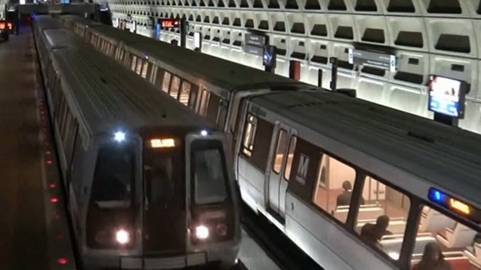
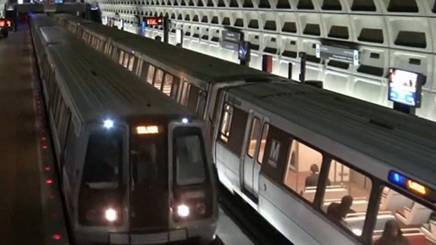
invisible being to provide support and guidance when there is no hope left. Two subway trains
are temporarily stopped next to each other.
A young woman seated at a window of one of the trains is staring absent-
mindedly at the window of the opposite train.
A man sits down in the other train at the opposite window. He puts his bag on the seat beside him, and,
after a minute or so, looks over and sees her. They stare intently at each other until the
man winks. She winks back, and they both
laugh. The two trains abruptly start and
slowly go their opposite ways. But it was
too late. The message had passed between
them. That powerful emotional message of
what might be had struck deep into each heart, and they would be forever haunted
by those few minutes. |
|
The woman’s train
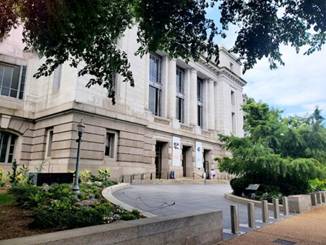
takes her to the Glassier Foundation, a Washington, D.C. humanitarian organization
providing short-term relief to global victims of natural disasters. The woman gets off the train, walks the short distance
to the Glassier Foundation’s headquarters and goes to her office. She is sitting at her desk, thinking about the
man who had winked at her that morning when a man enters. “Good morning Lydia.” “Good morning Aaron.” “I guess you are following the earthquake in Western
Turkey.” “Not really.” “I’m not surprised.
It’s just now making the news.
It’s located near the Georgian border, and, from what we know, it is a
magnitude 7.8 earthquake. It’s a big one. The buildings in the region were not designed
to withstand earthquakes of that intensity.
The Turkish Government has requested our assistance on a short term basis. We have to get food, water, and shelters set
up immediately. I want you and your team
to establish a temporary relief camp.
James has a location for the camp and will start flying tents and supplies
there today.” When Aaron leaves Lydia’s office, Lydia walks rapidly
to the elevator and goes to James’ office on the fourth floor. James is on the telephone, so Lydia sits in one of the
chairs in front of his desk. While she
is sitting there, her mind returns to the events of the morning. The whole thing was so spontaneous. She was flirting with a complete stranger. Something she had never done before or ever
wanted to do until that moment. It was
only because they were on two different trains could such an encounter have occurred. She would have never flirted in such a manner
had they been sitting across the aisle from each other in the same train. James hangs up the telephone and says, “I have everything
in motion. The Turkish Government wants
us to establish a relief camp near the mountain town of Ardin about 70 miles from
the Georgian border. It’s a town of about
15,000 which has been leveled. A bridge
which could have been used to freight cargo into the town by rail has collapsed. The road into the town runs through a mountain
pass and is blocked by multiple rock slides.” James pauses.
“There is a problem.” “You haven’t been able to get aircraft?” “I was able to charter three cargo helicopters on a short-term
basis and a fixed-wing, light cargo plane on a long-term basis, but the company
I charted the aircraft from only had three available pilots. I was fortunate to be able to do that much. Everybody in Turkey is focused on the bigger
towns and cities.” “Naturally. What
is short-term?” “Four days.” “Four days! You
know that isn’t enough time to bring in all we need.” James shrugs.
“It’s the best I could do from here.
Perhaps when you get to Turkey you can locate some more helicopters. Don’t forget about the fixed-wing, light cargo
plane. Randolph can fly that.” “Does Ardin have an airport?” Lydia asks. “I don’t know.” “With a population of 15,000, if it has one, it’s visual. Where is the cargo being unloaded?” “In Erzurum.
I can book your team a flight to Erzurum on Turkish Airlines. The travel time is sixteen hours: ten hours
from Dulles to Istanbul, a four-hour layover, and then two hours to Erzurum.” “How far is Erzurum from Ardin?” “Around 150 miles.” “What are the flight times out of Dulles?” “There is a flight every day at 4: 40 P.M.” “When are the tents arriving?” “They are arriving now.” Lydia stands up.
“I’ll meet with my team this morning.
I’ll have Alexandro bring you a list of the four available team members
who live outside the Washington D.C. area.
You and he can arrange their flights.
I have 21 available team members in the D.C. area. He will give you that list also. Book as many of us as possible on tomorrow’s
flight, but make sure the five team leaders are included. The rest will have to follow as seating becomes
available.” |

|
The man’s train
takes him to his office at the headquarters of Willis Sensor Corporation, a manufacturer
of sensors for use in its proprietary wireless sensor networks world-wide. When he gets to his office, the man’s thoughts once again
return to his chance encounter with the woman in the opposite train. That’s never happened to me before. As beautiful a woman as I’ll ever see,
sitting there, just out of reach, staring at me. I was thinking I had to get her into my life,
and the wink just happened. It must have
been a reflex to what I was thinking.
And BAM!, without a moment’s hesitation, she winked back. She must have been thinking the same thing. Then we both laughed about the whole situation. That is one woman I will never forget. They say there is a cycle in human events,
so maybe we will meet again. I hope so. The man’s phone rings. He listens, hangs up the phone, grabs his computer,
and walks down the hall to the conference room. When he enters the room, he sees Dan Willis,
the company’s President, and Mark Lewis, the company’s Vice-President of Engineering,
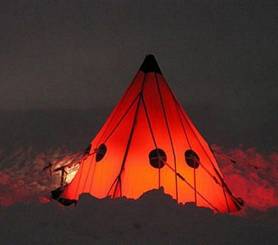
looking at picture of an orange antenna in the snow. He sits down at the conference table. “Good morning, Keith,” Dan says. “I received a call from Rob Noteworthy, our
General Manager in Italy, last night.
He told me our data acquisition system in the Antarctic has stopped working. This is our most advanced data collection system. There is nothing even close to it in the market. Our reputation is built on continuity of collection
in any kind of climate conditions. We have
to get this system back on line without delay.” “Any idea of why it failed?” Keith asks. Mark says, “My guess is it’s one of the antenna’s laser
displacement sensors. Since this system
is by necessity a wireless ad hoc network, there is no central controller to show
where the failure is located. Except for
the laser displacement sensors, each of the network sensors has a back-up sensor
and the system as a whole will keep on collecting data even though several of
the sensors and their back-ups fail. If
a laser displacement sensor fails, the information being sent to the network can’t
be received.” “That sounds right,” Keith says. “You can see the four sensors protruding from
the antenna. I’ll have to go back to Antarctica
and replace them. It’s going to take some
time. I have to get permission from the
Government to go there.” “The Italian Government has given permission for two
of our employees to go immediately. Rob
confirmed it with Enzo Ferrari, the Station Leader in Antarctica,” Deems says. “Apparently, the fact that our data collection
system has failed is holding up an exercise by The European Space Agency. What exactly will be tracked during the exercise
is classified, but it doesn’t matter.
We have to get the system operational.
This time, I’m going to send Mark and a tech from your department. Who should we send?” “Well,
Cameron. He helped me establish the network
and is the only person in my department who has been on the ice,” Keith says. “Have you been on the ice, Mark?” “If you
mean to Antarctica, no, I haven’t.” “Can you
fly a DHC-6 Twin Otter?” “No.” “Deems,
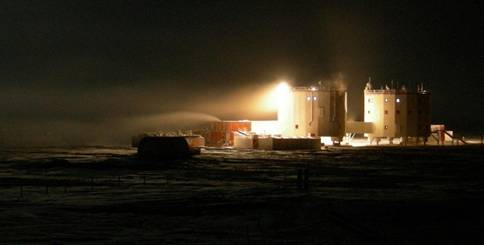
the Italian station is located on Dome C which is on the Antarctic Plateau,
deep inside Antarctica. The temperatures
there are the lowest in the world. It would
take at least a week for Mark to learn how to work in that type of climate. It’s an alien environment. Our network is five miles away from the station. A tent has to be set up and head lamps will
have to be used to replace the sensors, if that’s the point of failure, and, after
that, the network has to be verified as operational. All this has to be done in sub-zero temperatures. To get there, you have to fly commercial to
Christchurch, New Zealand, and then to the
Dumont d'Urville
Station on the Antarctica coast. From there,
you pick up a Twin Otter and pilot it 750 miles to the Italian station. Then, you drive a tractor from the station to
our network.” “I know
what you are getting at Keith,” Deems says, “but you are the Vice-President of Operations, and you know we have three new
projects starting which require your attention and guidance.” There is silence for several minutes before Deems says,
“O.K. You and Cameron can go. Getting the
network operational is our number one priority at the moment.” Mark says, “I suggest you install another antenna maybe
a half-mile from the main antenna, as a backup antenna.” “Yep,” Keith says.
“If I had done that the first time, we wouldn’t have this problem. I’ll get Cameron, and we’ll leave tomorrow.” Keith leaves the
conference room and takes the elevator down to Cameron’s office and enters it. Cameron looks up. “Good morning, Cameron,” Keith says. “The Antarctica network we set up in December
has failed. Deems wants us on the ice as
soon as possible. He said a European Space Agency
exercise is planned which requires our network. The Italian Government must think this is an
extremely important exercise because they gave us immediate clearance. The station leader is expecting us, so it will
just be a matter of doing what we did before.
Will you be able to leave tomorrow?” “Sure. Being single,
has its advantages.” Cameron pauses. “It’s winter down there now.” “I know. It’s
going to be a challenge to say the least.
If you don’t want to go, you don’t have to. There is some danger involved.” “No, I’ll go.
I need some excitement. Any idea
what the problem is?” “Mark and I are pretty sure it is a laser displacement
sensor on the antenna which should be easy to replace. While we’re at it, we’re also going to install
a backup antenna. Do you still have your
Antarctic clothing?” “It’s in a storage unit. I don’t know why I saved it, but I’m glad I
did. How about you?” Keith chuckles.
“I haven’t had time to unpack mine.” Keith and Cameron
board their flight to Christchurch the next afternoon and are in the air. Cameron says, “This is what I like about flying with
a V.P.— flying first class.” “We aren’t going to have downtime when we get to Christchurch
like we did before,” Keith says. “Our flight
to Dumont d'Urville
Station leaves four hours after we arrive—if we arrive on time. If we don’t make that flight, we will have to
wait two days for the next one. I’m feeling
extremely drowsy. I'm going to nod off.” Keith closes
his eyes. “I have
a question for you before you go to sleep,” Cameron says. Cameron
waits for a reply. When Keith doesn’t answer,
Cameron stands up and walks to the plane’s galley. Forty-five minutes later, Keith opens his eyes and thinks
about what just happened. |
|
When the Glassier
Foundation’s team disembarks from their airplane
in Erzurum, the Turkish Government interpreter assigned to the team, Hasan, takes
them to where Glassier’s cargo will be loaded on helicopters for Ardin. “How was your trip Lydia?” Hasan asks. “Long, of course,” Lydia says. “Fortunately, we landed here in the morning
and not the middle of the night as often happens. Who’s in charge of aircraft? I need to talk to him about aircraft availability.” “That would be Sinan Aksoy, a manager for Redbird Charter. He’s right over there.” As they walk towards Sinan, Lydia asks, “Did anybody
from the Glassier Foundation request a phone for me?” “No, but it’s not a problem. You can have this one. It belongs to the Turkish Government. I have another one.” He hands her his phone. “You press 73 to get a dial tone. The number taped on the back is this phone’s
number.” “Thank you,” Lydia says. When they get to where Sinan is standing, Hassan says,
“Sinan, this is Ms. Willard from the Glassier Foundation. She is in charge of Glassier’s assistance program.” Sinan bows slightly. “It’s nice to meet you Sinan. Sinan bows slightly. “Please give me an update on what has happened since
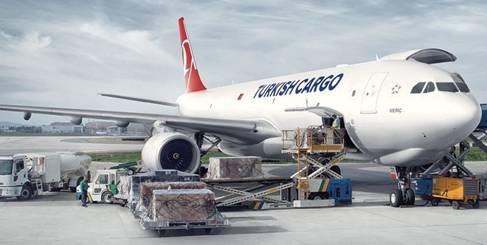
our relief supplies started arriving.” “The tents and other material came last night in three
Airbus A330-200F’s. We have three MI-8-MTV
helicopters each of which can carry 20 passengers, cargo, or a combination of
passengers and cargo, as well as cargo by sling. Redbird is awaiting loading instructions and
priorities from Glassier.” Lydia turns to Hasan. “We are organized into five-person teams, so
the first thing we must have immediately is seven cell phones, one for each team
leader and two spares. We have to have
these so we can communicate. How long will
it take to get the phones?” Hasan says, “I will have them here in an hour.” Hasan takes a phone from his pocket and thumbs a number. While Hasan is talking on the phone, Lydia turns
to Sinan. “How long will we have the helicopters?” “Four days. That
is what our management agreed to.” “That is not enough time to move all the material from
here to Ardin. How many pilots does Redbird
have?” “Three.” “I understand Redbird has a fixed-wing, light cargo plane Glassier has chartered on a
long-term basis.” “That is correct,” Sinan says. “But we don’t have a pilot for it.” “Glassier can provide a pilot.” Hasan ends his call.
“The phones are on the way,” he says. “Thank you very much Hasan.” “Please show me the light cargo plane,” she says to Sinan. |
|
They walk to a
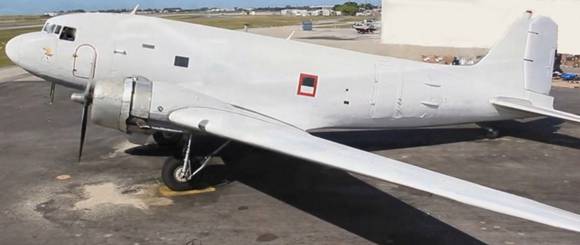
nearby area where a white plane is parked. “This is the light cargo plane,” Sinan says pointing
towards a white plane. Lydia opens the cargo door on the side of the plane,
gets in, and walks the length of the plane.
She pauses at the cockpit, sits in the pilot’s seat, turns on the motor,
studies the instrument panel for several minutes, and turns off the motor before
returning. “This is a DC-3,” she says to Sinan. “It’s an old plane with a primitive turn coordinator. It was last produced during World War II, but
is still flown in third world countries where airports are not paved and the runways
are short. Does Ardin have an airport?” “No,” Sinan says.
“Just a grassy field, but we have landed this plane there before.” “Is there someone in Ardin Hasan can call to ascertain
the condition of the field?” “The Muhtar, Emin Erkul,” Hasan answers. “I have his telephone number on my personal
phone. He is the same as Mayor in America.” “Excellent Hasan.
Please call him now and ask if the Ardin airstrip is clear and safe for
landing. If he speaks English, I would
like to talk to him.” While Hasan is placing the call, Lydia says, “Sinan,
unfortunately, this DC-3 doesn’t have the cargo space Glassier needs. Can Redbird borrow aircraft or pilots from other
charter companies?” “Impossible, Ms. Willard,” Sinan says. “There are not enough pilots or aircraft because
of the earthquake. Other companies are
asking to borrow from us. I have heard
the Government has asked other countries for aircraft. Perhaps in a few days when these planes arrive,
we can get something larger for you.” “All right, we will wait. Please give instructions now to have this plane
loaded with as many tents as you can.
Once that is underway, please come to the Glassier area and join our team
meeting. We will be establishing an action
plan, and I would like your input.” Sinan nods and walks away rapidly. Lydia hears Hasan speaking in Turkish over the telephone. I guess the Muhtar doesn’t speak English. The memory of the man on the train suddenly
enters her thoughts. Why do I keep thinking
about him? I will probably never see him
again, but, man, in just those few minutes, he pressed all my emotional buttons
. . . and he pressed them hard! I don’t know how he did it, but he did. Oh, I wish I could meet him again. Her thoughts are interrupted when she sees Hasan ending
the call. “Muhtar Erkul says the airfield is about the only place
not affected by the earthquake. He says
you should consider putting the tents that area. He says please hurry. His people have nothing. They are desperate.” “Let’s go over to the Glassier area for a team meeting,
and we will establish an action plan.
Sinan will meet us there once he has started Redbird personnel loading
tents onto the DC-3. The loading should
take an hour.” Lydia and Hasan
get to Glassier’s staging area, and the team, along with Sinan and two of his
assistants, quickly establish a material and team loading plan for the three Redbird
cargo helicopters. Lydia calls James to determine the arrival status of
the four team members who lived outside the D.C. area. James tells her they will be arriving the day
after tomorrow. Randolph, who is the only
pilot on the team besides herself, is one of those four team members. Lydia tells the team she will fly the cargo
plane to Ardin, and Hasan will stay with them as an interpreter. Lydia and Sinan return to the DC-3. When they get to the DC-3, a Redbird employee is standing
beside it and gives them a thumbs up. Lydia smiles and gives the employee a thumbs up in return. She says to Sinan, “There are two issues which need to
be addressed before I can become airborne: the weather and the route. Please call Muhtar Erkul and ask him what the
current weather is in Ardin and what the forecast is for the next four hours.” “Miss Willard, I don’t have the Muhtar’s telephone number.” “Does Redbird have an agent in Ardin?” “No, but there is a travel agent we use as needed.” “Please call him.” Sinan nods and makes the call. After a brief conversation, he hangs up and
says, “The weather is clear. There are
no clouds in the sky. The agent says it
will be like that for the rest of the day.” “Good. Now about
the route.” “I will have a map brought here immediately.” Sinan makes another call. When he finishes, he says, “My office is sending
a map used by our pilots who fly to Ardin.
It will show the landmarks along the way.” “Thank you. Let’s
see how the plane is loaded and what is loaded.” While they are inspecting the plane’s loading and bill
of lading, the map arrives. After they finish the inspection, Lydia says, “The loading
seems in order. Now the map.” Sinan lays the map down flat on the wing of the plane
and points to a railroad track running between Erzurum and Ardin. “This is the Erzurum–Ardin railway. When you get into the air, you will see it. Just follow it straight for 200 miles. You can see it makes a sharp right on the other
side of Ardin. The coordinates for Ardin
are written here, North 40.60 East 43.09. Beside the coordinates is written the aircraft
identification, RedBird511.” He turns the map over. “This is a map of Ardin. The landing field is here on the edge of the
town to the left of the tracks.” Lydia studies both sides of the map for a few minutes
before saying, “I’m ready. Do I have to
file a flight plan?” “No. I will call
our office now and tell them you are ready.
They will notify the tower of your planned destination, speed, and altitude. We suggest cruising this plane at a speed of
185 miles per hour and at an altitude of 10,000 feet. Just line up behind those two planes over to
the right. The tower will give you clearance
after them. I will also call our agent
and tell him to expect you in about an hour and a half. Are there any instructions for him?” “No. I’ll direct
the unloading after I arrive there. The
helicopters carrying food and members of the Glassier team will be landing shortly
thereafter. Thank you so much Sinan. You and Redbird are on top of this one. I only wish all our initial contacts would be
this easy.” “Thank you Miss Willard,” he says, then he pauses. “Miss Willard I must tell you about the weather. Although we believe it is clear, if you encounter
any clouds, you must turn around and come back. Ardin is surrounded by mountains. The entrance to the town is only wide enough
for its narrow river, a road, and a railroad track. You must not lose sight of them. Even our best pilots will not attempt to enter
Ardin if there are clouds. If you do,
you will die.” Lydia finds the
railroad tracks easily once she is airborne.
After following them for a while, she turns on the autopilot. She thinks, primitive, but it works. She goes over what can be done by the Ardin
locals prior to the helicopters coming in.
The tents can be laid out and the poles positioned. There are always English-speaking locals to
assist. If not, there is always sign language. The tent layout is simple. Then she begins to fantasize about the man on
the train. She’ll take a long vacation,
and they’ll go to the Greek Islands. He’s
smart, has a good sense of humor, and an outgoing personality. Heads will turn with envy as we pass by. Lydia’s attention returns as she becomes aware of clouds
on the mountains to her left. The plane
has entered the foothills and she can see where the railroad tracks enter the
mountains. The clouds are a good distance
away, so she decides to keep going. She
needs to get the tents to the people of Ardin. The helicopters may be delayed. She climbs to a higher altitude to keep watch
on the clouds. They aren’t moving towards
her, but a light fog has formed under her.
She lowers her altitude to keep the tracks is sight. Upslope fog, but it’s just forming. I’m almost there, I have to keep going. The fog is getting thicker. I’m not going to make it! I’m not going to make it! Keith is standing
beside Lydia in the plane. He has to bank
60 degrees immediately to avoid the mountain in front of the plane. He puts his hands on Lydia’s and begins to bank. Lydia watches in astonishment as her hands turn the steering-wheel yoke to the left, a man’s
voice beside her says, “We are banking 60 degrees to avoid the mountain in front
of us. I had to take control to prevent
you from dying. When we level off, we will
leave the fog. Make landing preparations
when you see the wreckage of the railroad bridge. The visual landing field is on your left. It runs parallels to the town and is long enough
for a DC-3 to land and takeoff.” As the plane levels off, Lydia says,
“We are out of the fog now, and I see the bridge in the distance. How do you know all this?” “I don’t know,” Keith says. “I have no idea. All I know is I have to get you safely to Ardin. It’s not your time.” “I’m making landing preparations. I see the field and the locals are moving off
of it. The town is in ruins. I’m making my approach.” Lydia makes the landing and taxis to a halt. She turns to thank the man for saving her life,
but to her surprise he’s not there. He
seemed so real. |
|
Keith and Cameron
make their connection from Christchurch, New Zealand to Dumont d'Urville Station on time. The backup antenna and the replacement sensors
for the primary antenna shipped separately are waiting for them when they arrive. They immediately load them on a DHC-6 Twin Otter
used to supply the Italian station. They
arrive five hours later at the Italian station where Enzo Ferrari, the Italian
Station Leader, greets them. “Nice to see you both again. Did you have any trouble landing on the ice? Because it is winter, we could not prepare a
landing strip as we normally would,” Enzo says. “Not a bit,” Keith says. “I want to thank you for coming so quickly. The Government and The European
Space Agency have been calling me every hour asking if you have arrived. You would think they were praying for Shackleton.” “Praying
for Shackleton?” Keith asks. “Sir Ernest
Shackleton. He was a 1914 British explorer
trying to make the first land crossing of Antarctica when his ship was crushed
by the ice. He and his crew endured extreme hunger, thirst, and cold, but by sheer will-power
Shackleton brought them to safety. We have
a saying here, ‘when disaster strikes and all hope is gone, get down on your knees
and pray for Shackleton to pull you through.’” “I can’t
believe this is the same place we came to just a few months ago,” Cameron says. “I know,”
Enzo says. “Without the sun, it is very,
very cold and dark outside the station especially when clouds obscure the moon. Our outside activity during the winter is restricted
to projects and experiments in the vicinity of the station. Nobody goes outside the station perimeter during
the winter. You and Cameron are political
exceptions. I don’t like it, but that’s
the way it is.” He shrugs his shoulders. “Anyway, I’ll do my best to keep you safe. Be sure you each have two satellite phones,
two location trackers, and a compass before you leave. The compass is not accurate here, but station
protocol requires we give you one. The
location trackers have the coordinates of the antenna.” Keith asks,
“How does the weather look for the next twenty-four hours?” “Nothing
on the on the radar. How long do you think
the repairs will take?” “Once we
get to the antenna, I estimate five hours.
This is our first failure for this type of data collection system. We are almost certain one of the laser displacement
sensors on the primary antenna failed, so we will replace all the sensors on the
primary antenna and install a backup antenna about a half mile from the primary
antenna. A backup antenna will alleviate
that problem or, at least, lessen the need for an immediate repair should it occur
again in the future.” “What do
you need from us?” Enzo asks. “Nothing
out of the ordinary,” Keith says. “A tractor
and three sleds should do it. Two for our
repair equipment and one for the tent and other station-supplied equipment. We will need help in transferring our repair
equipment and backup antenna from the plane to the sleds. Everything is palletized.” “Good. Then all we’ll need is a forklift. When you install the backup antenna, please
call in its location to us so we can add it as a waypoint.” |
|
Keith and Cameron arrive at the primary antenna, set
up the tent, and unload their equipment.
After replacing the four laser displacement sensors on the antenna,
they verify the network is operational, and return to the tent. “The testing wore me out,”
Cameron says. “I just want to get in a
sleeping bag and warm up. It’s just as
cold inside the tent as it is outside.
Can we take a break before we install the backup antenna?” “No. I don’t want to push our luck with weather. There is no wind now, but weather conditions
change rapidly here. Since it is just a
matter of laying the line on top of the ice to connect the backup to the network
and drilling a hole with a power auger to put the antenna into the ice, I can
take care of it by myself. You stay here
and call Enzo. He will be happy to hear
the network is operational, and Shackleton has answered his prayers.” Cameron laughs. “I’ll tell him,” Cameron says. Then he asks, “Are you sure you don’t need my
help?” “I’ll be OK. No use in both of us freezing to death. Installing the backup is a one-man job. It’s more important that you call Deems and
Enzo to tell them the network is fully functional. If you can’t reach Deems, ask Enzo to relay
the news.” |

|
Keith drives the
tractor a half mile from the primary antenna, laying the line to connect the backup
antenna as he goes. He stops the tractor,
gets out of the cab, and onto the ice. He pauses for a moment and stares into the darkness. The woman from the train enters his consciousness,
and he chuckles. When I opened the conversation
with a wink, she kept it going. She was
definitely beautiful, but there was something else about her. We had known each other for a long time. We were on the same page. Strange.
And the dream I had about rescuing her. It was so real. Very, very strange. We will meet again. I’m sure of it. Suddenly Keith comes back to reality. I have to get moving. I’ll drill a deep hole in the ice with the power
auger, raise the antenna, lower it into hole, and pour water into the hole. After the water freezes to the antenna,
I’ll return to the tent. Cameron and I
will pack up, and we’ll go back to the station. Right on schedule. He takes the power auger from the sled, walks a few feet
away, pushes it into the snow, releases the safety, puts his hands on the two
guide bars, and presses the start button.
Nothing happens. He opens the battery case, takes the battery out, puts
the battery back, puts the auger back into position, grabs the guide bars,
and presses the start button. Nothing happens. The battery isn’t working, and I don’t have time to heat
it up in the tractor’s cab. I’ll use the
hand auger. Keith puts the power auger back on the sled, takes out
the hand auger, pushes it into the snow, and easily turns it round and round until
the auger is level with the surface of the snow. He unwinds the auger from the hole and realizes he hasn’t
drilled into ice, only into snow. I’ll have to find ice to drill into otherwise, I can’t
anchor the antenna. It’s easier to determine
the presence of ice on foot, so I’ll locate the ice, then I’ll move the tractor
to that location. The ice can’t be far
away. Satellite ice-surface temperature
sensors pinpointed these coordinates as having surface ice. He marks the tractor’s coordinates on his location tracker
and begins to walk, carefully scrutinizing the surrounding ground for ice as he
goes. A slight wind arises as he walks,
but he is not aware of it. His total focus
is on finding surface ice to secure the backup antenna. After walking for about fifteen minutes, he locates ice
and stops. The wind is blowing hard now. Keith turns his head in the direction of the
wind and sees a dark-white wall coming towards him. He is immediately in a wind so strong that it
takes all the strength he has to keep from being blown over. A whiteout! I
have to get back to the tractor. I can
stay in the cab until this thing is over. He takes the location tracker out of his pocket and holds
it close to his face so he can read it. The tracker isn’t giving me a reading! It can’t be the batteries. It was in my pocket. It’s supposed to work even in a whiteout. He shakes the location tracker, but still no reading. He puts it back into his pocket. He is completely disoriented by the blizzard
conditions of the whiteout. He knows has
to keep moving to avoid freezing to death, but he can only walk with the wind
to his back. Keep walking.
Keep walking. Keep walking or you’re
done for. Keith trips and falls onto the ice. He gets on his hand and knees, pulls one knee
and then the other under his chest trying to get his shoe spikes into the ice,
the wind keeps blowing him back onto the ice.
He crawls on his hands and knees until he reaches snow. He stands up and starts to walk again until
his left leg sinks into the snow. He falls
backward, sits up, and pulls the leg out of the snow. If I go forward, I may sink into deep snow and not be
able to get out. I would go back the way
I came, but I’m completely disoriented.
Shackleton,
if you are out there somewhere, please help me. He senses the presence of another person. One he can’t see, but knows is there. “Is that you Shackleton?” Keith asks. “I’m here to save you,” Lydia says. “Take the compass out of your pocket. We must return quickly to the tractor.” “You’re not Shackleton. You’re a woman.” “Shackleton comes in many forms.” “But the compass won’t work here. It is unreliable. We can’t locate the tractor with the compass.” “Take it out of your pocket.” Keith takes the compass out of his pocket, and looks
at it. He holds it up for her to see. “Follow the South arrow,” Lydia says. “It is pointing to the tractor. I’ll walk beside you.” Keith walks slowly following the arrow. “If we are going in the direction of the tractor
it shouldn’t be too far. In this whiteout,
we could be within a few feet of it and not see it.” “I’m right here beside you,” Lydia says. “Follow the compass arrow, it will take you
to the tractor.” After an agonizing struggle against the wind and snow,
Keith reaches the tractor. He gets in the
cab, turns on the heat, and takes off his face mask. “What should I do next?” Keith asks. “Follow the compass’s North arrow,” Lydia says. “It’s pointing towards the tent.” As Keith navigates the tractor using the compass, he
says, “This is similar to a dream I had.” Shackleton is no longer there. |
|
Several months
have passed since Keith returned from Antarctica. He is on the train going to work. The train slowly comes to a stop at one of the
stations. Keith puts down the management presentation he is reading
and looks out his window at the train coming towards him on the opposite track. Perhaps she will be on this train. I always think that when I’m stopped at a station. I can’t stop myself from thinking that. I know some day, some way, somehow we will meet. I just know it. The dream I had on the plane to New Zealand
about saving her life was too real to be a dream. The woman who saved my life in Antarctica;
she was no imaginary person. The other train stops, and Keith looks at the window
opposite him. A teenage couple.
They are getting off. The new passengers
are boarding. That’s her! He leaps to his feet, waving his arms frantically to
get the attention of the woman in the opposite train walking past his window,
but a woman in front of her sits down in the seat opposite his window, and she
walks on by. He turns and walks rapidly trying not to lose sight of
her. She stops, pauses, and sits down next to a window opposite
Keith’s train. She takes her cell phone
out of her purse and turns it on. A man is sitting in the seat opposite her window. As he leans against the man’s legs and pounds the window
with his hand, Keith says to the man, “Please pardon me, but this is an extreme
emergency.” The woman suddenly puts down her phone and looks at him. Keith moves his finger rapidly back-and-forth towards
the end of the car. The woman nods,
immediately stands up, and walks quickly away. Each train gives
a sudden jolt as they slowly pull out of the station. As Keith’s train departs the station, he waits nervously,
anxiously on the platform, hoping she got off the train before it left. When the last car of each train passes the platform,
he is standing directly opposite the woman. They stare at each other for a few moments before Keith
shouts, “It’s time we met.” Lydia smiles and gives him two thumbs-up. |

https://firewire-connects.com
https://firewire-fiction.com
Copyright © 2023 by FireWire
All rights reserved, including
the right to reproduce this story or portions thereof in any form whatsoever.
 is a
registered trademark of FireWire.