|
|
Incident
at Big G By FireWire |

Story No. 11
|
On his way home from a Thursday-night basketball
league game, a man sees a Big G supermarket and remembers he needs eggs for breakfast. He picks up the eggs and enters the
checkout line behind an elderly woman.
After the woman checks out, the man sees a pink cell phone dotted all
over by small, red hearts lying on the shelf beneath the checkout
counter. When he picks it up, the red
hearts become bright, ruby-red LED’s sending the words “I LOVE TRACY” slowly
around and around the heart-shaped speaker. The man stares at the
moving LEDs. Cool. How cool is that. “Cash or credit card?”
the cashier asks. “Is this yours?” the man asks
holding up the phone. She shakes her head. He pays with cash, grabs
the change, grabs the eggs, and trots out the store. He catches up with the
elderly woman. “Pardon me,” he says
holding up the phone. “Is this
yours? It was at the check-out register.” The elderly woman looks
at the flashing words and laughs.
“No. But, I wish it was.” Watching the LEDs go
around and around, the man walks back into the store. He touches some of the red hearts trying to
get a dial tone. At the customer service
counter, he holds up the phone.
“Anybody ask about this phone?” “No,” the man behind the
counter says. The man hands him the
phone. “I found it at check-out eleven
a few minutes ago.” Walking towards his car
in the parking lot, the man zips his jacket all the way to his neck and puts
his free hand in the coat pocket. Cold
tonight. The wind makes it worse. I should carry gloves and the goofy fur hat
with the earflaps in the car for these surprise cold snaps. They would come in handy tonight that’s for
sure. The man gets in his car
and starts the motor, but pauses when a woman walking rapidly in the shadows
catches his attention. She stops at
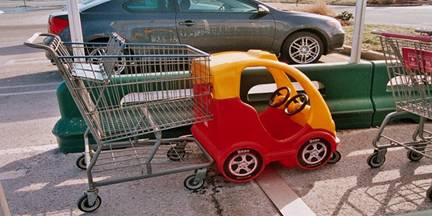
the grocery cart corral beside him and carefully examines a cart with a
child’s riding car in front. Her face
is obscured by the shadows and the fur trimmed hood of her coat. He is aware of only one
thing: His hand is moving on its own volition and in slow motion towards the
window button. When the hand reaches
button, the finger slowly presses on it.
When the window is down, the man’s consciousness returns. “Lose something?” he asks. The woman looks at him
anxiously. “My phone. I must have dropped it in the car.” She turns towards the parking lot. “I just found one and
left it at the customer service desk.” She turns back towards
him; her face hopeful. “Is it pink with red
hearts all over it?” he asks. Her expression suddenly
changes: she is embarrassed and struggling not to show it. “It was a gift,” she
says, her voice almost inaudible. Her face has no defense against
his eyes. “Tracy?” he asks. She slowly shakes her
head. “No,” she says softly. After a few moments, she
turns her eyes away from his. “I must
go now,” she says. She turns and walks
rapidly towards the Big G. Leaving his window down
and turning up the heat, the man waits for the woman to come out. Soon, she comes out of
the store. She looks at his car and
mouths the words, “Thank you,” then walks rapidly towards the parking lot
opposite him. At the edge of the parked
cars, she stops and looks back towards his car for a moment before turning
and disappearing. |
|
Two weeks have passed since the man found the phone
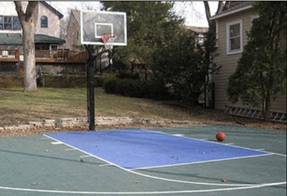
at the Big G. It’s late afternoon, and
he is shooting baskets in his backyard basketball court. A car pulls into the man’s driveway. A tall man gets out. “Say Old Man. How are things?” the tall man says. “Can’t complain,” the man
says. The tall man stands
silently watching the man shoot baskets. After a few shots, the
man passes the ball to the tall man.
“How about one-on-one?” the man asks. The tall man shakes his
head. “Old Man, the guys want to know
when you are coming back. It’s been
two weeks.” “I know it’s been two
weeks Stork, but I’ve had personal business to take care.” “How much longer do you
think it might take?” “I’ll give it another
week. After that . . . probably just
Thursday nights.” “For how long on
Thursdays?” “Until I’m dead.” “Jumper says that every
night he’s been to the liquor store near the University these last two weeks
he sees you sitting in your car in the Big G’s parking lot. He’s never said anything to you. He figured it was none of his business.” After a long silence the
tall man says, “I know it’s none of my business either, Old Man, but we’ve
been getting beat up real bad since you’ve been gone. You may not be aware of it, but we aren’t
number one in the league any more.
It’s humiliating to walk on the court every Tuesday and Thursday night
and get our nose rub in it by those wimps.
We need your three-pointer.” The man shoots a
basket. “What about the Zipster?” The tall man says, “The Zipster! He can’t
shoot a three-pointer.” “How about Snake? He’s deadly from the outside.” “When the time comes for
the big one, he’ll either dribble or pass.”
Staring at the ground and slowly shaking his head, the tall man
says. “Snake’s not a clutch guy.” The tall man looks at the
man. “Old Man please come back. You’re the captain of our team. We need you.” “Stork, two weeks ago I
remembered I needed eggs and stopped at the Big G near the University. Never been there in my life. While I was checking out, I found a phone,
turned it in to lost-and-found, and just as I started to pull out of my
parking spot, a stop-the-game—I mean—a once-in-a-lifetime, stop-everything,
skip-the-party, lets-go-home babe runs up to the shopping cart corral beside
me and starts looking for something in one of the carts. I rolled down my window and said ‘Lose
something?’” The man pauses. “Then—all of a sudden—she
wasn’t standing by the shopping cart corral, and I wasn’t sitting in my
car. We were inside each other. I knew she could handle whatever came her
way. I knew she would cover my back
and never let me down. I knew she
would be strong when I was weak, be a great mom, and let the little things
go. I knew I was the one she had been
looking for. I knew she needed me like
I needed her.” After a several moments
of silence, the tall man asks, “Who was she?” “She seemed extremely
anxious to get her phone from the store and get to her car, so I didn’t have
a chance to get her personal information.
I’ve been at the Big G every night hoping to run into her.” “How can you be sure she
felt the same way? You said she did
leave in a hurry, didn’t you?” “She did leave in hurry,
but on her way out of the store, she said “Thank you,” and gave me a look
that melted my car. She wouldn’t have
done that if she didn’t have an interest in meeting again.” “Why didn’t you set up
something then?” “She didn’t actually come
to my car; it was from a distance. Her
car was in another part of the parking lot.” “Oh,” the tall man
says. He pauses. “How can you be sure she wasn’t like
you? Just a one timer.” “I hope not. I’m hoping Fortune stopped her spinning
wheel for me this time.” |
|
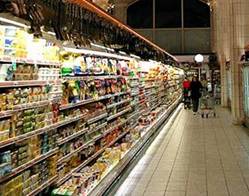
After the tall man leaves, the man drives to the Big
G, parks, and goes into the store for a quick look around before returning to
his car for his nightly vigil. In today’s world, I could
be considered a stalker, but the condition of unwanted contact doesn’t
exist. She wants me to contact
her. Just the canned goods aisle
left. Now that’s a pair of
jeans! Top of the line. It doesn’t get better than that. Too bad she’s married. Seems like all the good ones are
married. She’s giving the label on
that can the third degree. Must not
have passed the mom test, she’s turning to put it back. Oh!
Oh! From the side it looks like
her, but maybe not. I should have
realized she was married when she was looking for her phone in the kid’s
grocery cart. She’s not wearing a
ring. Maybe that’s not her daughter. Maybe she’s baby-sitting. Only one way to find out. To avoid startling the woman by coming up behind
her, the man walks quickly down the adjoining aisle and comes in the canned
goods aisle from the other end. The
man pauses, takes a can of asparagus from a shelf, pretends to be reading the
label, and waits for the woman to notice him. When the woman sees him,
she stops. The man smiles, waves, and
walks to her. “What a coincidence. Do you remember me? We met briefly a couple of weeks ago in the
parking lot when you lost your phone.
I was the guy who turned it into the lost-and-found.” “I remember you, although
I’m surprised you recognized me. I was
bundled up like an Eskimo squaw.” The man looks down at the
little girl in the child’s plastic automobile attached to the front of the
grocery cart. The girl is looking up
at him. The man extends his hand
to the woman. “I’m Dave Diamond.” The woman takes his
hand. “Crystal,” she says and releases
it. He looks down at the
little girl again. “She’s pretty.” “Thank you. She’s my daughter.” Looking at the little
girl, he asks, “What’s your name?” “Tracy,” the little girl
says. He looks at Crystal. “So she’s Tracy.” Crystal nods. He glances quickly at her
left hand and crosses his arms. He looks at the floor for
a few moments before looking at her.
“Are you married?” he asks. She slowly lifts her left
hand and holds it in front of him.
“Didn’t you notice?” He shrugs. “Due diligence.” After a few seconds of
silence, Dave says, “You have an interesting phone. How does it work? I didn’t see any buttons to press. I pressed the hearts but nothing happened.” “It’s completely voice
controlled. Would you like a demo?” “I would, but first, tell
me how the message “I Love Tracy” turns on and off. It’s been on mind for the last two weeks.” Crystal laughs. “A typical male. Seduced by a shiny thing with bright lights
that blink on and off.” She takes her phone out
of her pocketbook. “The LED message
starts when the phone is picked up and stops if it’s either laid down or
activated.” She lays the phone in the
cart. “See. The message stopped.” She picks up the phone
and holds it like a microphone in front of her mouth. “First, you say a code.‘735’ then, to add a
name to the directory, you say ‘Add Name.
David Diamond. Add Number”” She puts the phone in
front of his mouth. “Say your number
into the speaker.” He says his number. Putting the phone in
front of her mouth, she says, “End Name.”
She puts the phone to her ear and says, “735 David Diamond.” Dave’s phone rings. He puts it to his ear and says, “Hi.” She smiles at him and
says, “End call.” Crystal puts the phone
back into her pocketbook. “That’s some phone,” he
says. “I’ll bet it cost big bucks.” “I’m sure it did,” she
says. Crystal begins slowly pushing
her cart. Dave walks beside her. At the cookie aisle, she
puts a package of Oreos in the cart. “Mommy, Oreo” Tracy asks. Crystal opens the package
and hands one to her. They move on to the fresh
fruit aisle. As she inspects a bunch
of grapes, Crystal asks, “How old are you?” “Twenty-seven.” She puts down the bunch
and picks up another. “You’re not a
bad looking guy. Why aren’t you
married?” “I haven’t found the
right one.” She puts the grapes in
her cart and pushes it towards the dairy aisle. “Have you ever had a
serious affair?” “What do you mean?” “I guess you haven’t.” “Of course I have.” “How many?” “Well . . . one,” he
says. She picks up a carton of
eggs. “What happened?” “It’s complicated.” Looking at the bottom of
the egg carton, she says, “How about two sentences.” He doesn’t answer. Crystal looks at him. “She had a habit I
couldn’t live with.” Crystal puts the carton
back and picks up another. She looks at him
again. “And?” “She didn’t want to
work.” Crystal opens the egg
carton and examines the eggs. “What was the habit?” she
asks. “When we had a
disagreement, she wouldn’t talk it out.
She would give me the silent treatment. We never resolved personal
differences. I had to live with the
problem. If it hadn’t been for that, I
would have married her in a heartbeat.” “Even though she didn’t
want to work?” “It was an issue we never
resolved.” “What happened to her?” “She married somebody
else.” Crystal puts the egg
carton in the cart and pushes on to the orange juice aisle. She reads the juice cartons. Dave says, “Amazing,
isn’t it, we should meet by chance twice at the Big G in such a short period
of time.” Crystal puts a carton of
orange juice in her cart. “The first
time was just an isolated incident.
This time you’re rolling the dice . . . but if you land on me, you’ll
go directly to jail.” “What do you mean?” “I mean I’m
seventeen. I’m under the age. If you mess with me, you’ll be prosecuted
so aggressively and relentlessly that you’ll be grateful when the prison door
shuts.” Dave looks at Tracy. “That’s right,” Crystal
says. “I had a baby at fifteen. I’m a slut.
I’m damaged goods.” Dave shakes his
head. “No you’re not.” Crystal takes an Oreo out
of the package in the cart, kneels down, and hands it to Tracy. Slowly stroking Tracy’s hair, she says,
“You’re Mommy’s best little girl.
Mommy loves you more than anything else in this world.” She stands up and turns
to Dave. “Friend, the message is that
this is the aisle to nowhere and it’s check-out time.” She pushes the cart to
the front of the store while Dave follows. In the checkout line,
Dave asks, “When will you be eighteen?” “April.” “April is only six months
away. What day in April?” “April 1st.” “Really?” “Really.” “April 1st is my mom’s
birthday. What a coincidence.” “That’s right,” she
says. “Just a coincidence. Just like the incident in the parking
lot. Nothing more.” “What day of the week is
it?” he asks. “I have no idea.” “Dave looks at his
phone. It’s a Thursday. Why don’t we meet in front of the Big G on
the following Saturday which would be April 3rd, at 12 noon?” “I can’t. I’ll be studying for exams.” “When I was in high
school, nobody studied at noon on Saturday for anything.” “I’m not in high
school. I’m a sophomore at the
University and, believe me, I’ll be studying.
Being a single mom puts priorities where they belong.” Dave is silent as they go
through the checkout line. In the parking lot, he
walks beside Crystal as she pushes the cart to her car. There’s money somewhere, a custom-made cell
phone and now a big, black, Mercedes sedan.
I’m in the wrong league. I
can’t support that life-style. She
probably doesn’t know what work is. I
blew it. After Crystal straps
Tracy into the car, Dave hands her the groceries as she puts them in the
trunk of the car. When all the groceries
are in the trunk, she closes it and says, “Thanks for your help. Perhaps our paths will cross again in the
future.” “Are you going to accept
my offer?” She shakes her head. “I don’t mean the offer
to meet in front of the Big G at noon.
The offer I mean is the offer I made when we first met.” “What are you talking
about?” “In those few minutes we
were together, your face and your eyes told me you had a big problem, a
deep-down problem with no way out. My
face and my eyes offered to share the burden, to find a way out.” He pauses. “A man and a woman
complement each other. Let me address
whatever is so disturbing—bring a man’s point-of-view into the situation.” She looks at him. “What makes you think I don’t already have
a man’s point-of-view?” “Your eyes told me.” “You wouldn’t have a
chance,” she says. “Nobody would. Thanks for the offer though.” She pauses. “You are very
perceptive.” She turns, walks to the
car door, gets in, and backs out of the parking space. Dave is holding onto the
shopping cart, watching her straighten the car. Once the car is straight, she pauses, looks
at him for several seconds, smiles, and drives away. He pushes the cart to the
return corral. She’s different that’s
for sure. Nice smile. Wonder what it means? Spontaneous? . . . or . . .
Premeditated? Is Fortune turning her
wheel again—my opportunity gone? I
guess I’ll know in six months. Right
after April Fools’ Day. |
|
It’s 11: 30 on Saturday, April 3rd, and an unseasonably
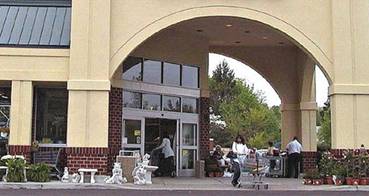
hot day. Dave parks his car and walks to the
entrance of the Big G. Best to get here a little
early in case she got the time mixed up. 12: 15. I’ll give her to 12:
30. Traffic is heavy. 12: 45. Looks like a
no-show. I should have expected
it. I’ll never find another woman like
her. She was from another planet. Damn it all. Dave puts his hands in his pockets and slowly walks
towards his car. His phone rings. He looks at the screen. It’s blank. He puts the phone to his
ear. “Dave Diamond.” “Hi David, this is
Crystal. Where are you?” “Exactly where I said I
would be at 12 o’clock noon today. In
front of the Big G. Don’t you
remember?” “Tracy and I are at the
salad bar. We’re going on a
picnic. Would you care to join us?” “I’ll be right there.” As he puts his phone
away, he chuckles. She’s bad. Real bad. When Dave is in sight of the salad bar, Crystal’s
back is too him with Tracy standing beside her. Her grocery cart is full. Oh wow! Look . . . at . . . those . . . shorts. She’s beautiful from any angle. Beautiful in every way. Dave picks up a plastic
salad plate, stands beside Crystal, and says, “What do you recommend?” She looks up and
smiles. “The fruit salad.” Looks down at Tracy, Dave
says, “Hi Tracy. Do you remember me?’ Crystal bends down, takes
Tracy’s hand, and says, “What do you say?” “Hi David Diamond.” Dave smiles. “You have a super memory Tracy.” “Mommy told me.” Crystal and Dave look at
each other for a moment before Crystal says, “We can drop these groceries at
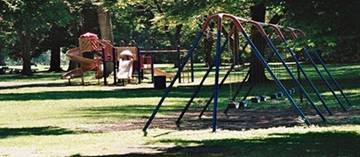
my place, then go to the park by the river for a picnic. It has an area with swings and slides and
kids for Tracy to play with. I’ve paid
for the groceries, so when we get our salads, we’ll be on our way.” |
|
Crystal and Dave are sitting on the grass in the
park watching Tracy playing with two other little girls. They sit in silence until
Crystal says, “I saw you on campus.” “When?” “In January. The first Saturday of the semester. I was on my way to a nine o’clock biology
lab.” “You should have thrown a
snowball. We could have met for coffee
after your lab.” Crystal hesitates. “I followed you.” “Oh?” “I sat on the bench
outside your class for a while. There
weren’t any other classes. The hall
was empty, and I could hear your lecture.” “How was it?” “Interesting.” Another period of
silence. “I went to the
Registrar’s office before the class was over and asked the lady at the desk
the name of Dr. Diamond’s course. She
said Mr. Diamond wasn’t a member of the facility, but a practicing attorney
who taught the law school’s only Saturday class. She thought I wanted to take your class and
said it had a waiting list. If I
wanted to take your class, the next chance would be next semester’s class
registration—first thing in the morning of the first day. The class fills up fast. Then she gave me a sharp look and said, “I
am sure you are aware his class is non-credit. It’s one of the University’s community
outreach classes.” She pauses. “The lady never told me
the name of the course, so I looked it up in the catalog. Litigation.
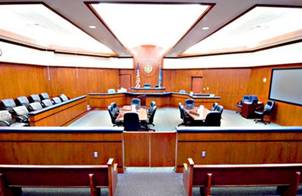
Courtroom litigation.” “I like teaching and
students are a good source of referrals,” he says. “You’re older than 27.” “No I’m 27.” “Am I missing
something? You graduated law school at
25 and at 27 you are teaching courtroom litigation at the most prestigious
law school in the country. Expertise
in courtroom litigation comes from courtroom litigation—not books.” “You are missing
something.” “What?” “I graduated the
University law school at 22. The same
year I received my undergraduate degree.
I've been practicing law for five years.” “That’s impossible!” she
says. “It would be—unless you
had my parents. Here comes Tracy. Let’s take her over to the swings.” Dave carries Tracy to the swings on his shoulders,
puts her in a child’s swing, and slowly pushes her back-and-forth while
Crystal stands beside him. “Here’s the deal,” Dave
says. “Both my parents were
attorneys—undergrad and law school graduates of the University. Their parents were attorneys—all graduates
of the University. The legal
profession goes back generations in my family. As for me.
I have been interested in law as long as I can remember. At 14, I was earning spending money as a
part-time legal secretary for my parents.
After they were elected judges, I would sit in their courtrooms after
school and watched attorneys argue cases.
I was hooked on the drama and intellectual combat being played
out. When I graduated high school, I
wanted to get in the courtroom as fast as I could.” Dave stops the swing and
asks, “How are you doing Tracy? Do you
want to keep going?” Tracy smiles and nods. “I can push for a while,”
Crystal says, “and takes the swing.” Dave says, “When I told
my Uncle Frank what I wanted to do, he said, “How would you like to try the impossible. How would you like to attend undergrad and
law school at the same time? I think
you can do it. You can enter the
University under the Gifted Scholar program.
I’ll arrange everything. The
worse that could happen would be you drop out of law school until you
graduate undergrad.” That’s how it
started. During the summers, I was in
the courtroom helping my parents.” “How did you enter law
school without an undergraduate degree?
Did your uncle make a big donation to the University?” “He’s Dean of the law
school.” Crystal is
astonished. “Weren’t there
repercussions, like charges of nepotism?” “Nope. We don’t have the same last name. Uncle Frank is my mom’s brother. I was bigger than most of the other
students and was low key about everything.
Outside my parents and grandparents, you are the only person I am
aware of that knows Dean Keenan is my uncle.
When he retires next year, it will be the end of the story.” Crystal stops the swing
and says to Tracy. “Let’s go to the
creek, so you can play in the mud with the other children.” |

|
Tracy is playing at the edge of a shallow stream
with some other children while Crystal and Dave sit on a rock a few feet
away. “How did you get to be a
sophomore at 17?” Dave asks. Silence. “I told you when you
asked.” Silence. “How can I help you if
you give me the silent treatment?” She gives him a sharp
look. After several seconds she
says, “I don’t need help, and I’m not giving you the silent treatment. This isn’t going to go anywhere, that’s all. I’ll drive you back to the Big G.” “You may not be giving me
the silently treatment, but you’re withholding information. If nothing comes out of this, then nothing
comes out it . . . at least give me a chance.
What do you have to lose?” Silence. “Do you have an uncle in
high places at the University?” he asks. “No.” “Did you max out your
SAT’s?” “No.” “What happened?” She looks at him for a
moment before saying, “To make an extremely unpleasant story short, going
back to high school was not an option after I had Crystal, so Dad met with
the Chairman of the University's Finance Committee and asked him,
point-blank, how much of an anonymous, no-strings-attached donation would get
me in. It was a lot.” "I see.” "My SATs were high enough and no rule
existed against admitting a 16 year-old with a GED because they didn’t think
a 16 year-old with a GED could score well on the SATs. Mom wanted Dad to file a discrimination
action, but he said it would take too long.” This time, Dave is
astonished. “Your last name wouldn’t
be Stillman would it?” Horrified, Crystal says,
“How did you know? Not even the
University Dean knows who gave the donation.
Only the Chairman of the Finance Committee knows. I would be expelled if it became known Dad
paid to get me in.” Dave holds up hands. “Don’t be alarmed. Uncle Frank is also the Chairman of the
Finance Committee. He said something
awhile back which puzzled me, and I drew the inference just this second.” “What did he say?” “He said, ‘Even an
attorney like Stillman knows where the University
is concerned, common sense and a smile prevail over legal action.’ The
comment stuck in my mind because, first of all, I had never heard the phrase
before, and, secondly, I had never heard of a connection between your dad and
the University.” Dave pauses. “Don’t worry. The University Dean doesn’t want to
know. Why risk a scandal over an
insignificant matter. An anonymous
donor is an anonymous donor.” After a few moments, Dave
says, “Now I understand why you said I would be grateful when the prison door
shut.” Crystal stands up and
reaches for the stroller. “It’s time
for me to leave.” In the car, Dave says, “I
didn’t mean anything negative about your father in what I just said. He is one of the best litigators in the
country.” “You really mean one of
the most ruthless, don’t you.” “Well . . . That too.” When they get to Dave’s
car at the Big G, Dave says, “I’d like to see you again. Could I take you and Tracy out to dinner
next week?” Crystal shakes her
head. “I can’t. I study every night.” Dave looks down, trying
to think of something to say to keep the relationship going before he gets
out of the car. “But you can come to my
place,” Crystal says. Dave looks up. “I can?
When?” “Tomorrow night at
six. I’ll make spaghetti.” She looks at Tracy. “You like spaghetti don’t you honey.” Tracy smiles and nods. Crystal looks at Dave and
chuckles. “Be prepared. She also likes to throw it
from-time-to-time.” |

|
When Dave arrives the next evening, Crystal
introduces him to Mrs. Jenkins from a company named Companion Services and
explains Companion Services provides 24/7 coverage which includes cooking,
cleaning, laundry, and baby-sitting.
Companion Services uses a room on the first floor, while Crystal and
Tracy live on the top two floors. At the end of the
evening, Dave stands and says, “Thanks for inviting me over. I never played “dodge the spaghetti”
before.” Crystal laughs. “I warned you.” “Yea, but you didn’t tell
she was ambidextrous.” Crystal chuckles, stands,
and they walk slowly down the steps. At the front door, Dave
says, “Crystal, I want to keep seeing you, but given your situation, I’m at a
loss of what to we could do together other than grocery shopping.” “That’s about it,”
Crystal says. They stand in silence for
several moments until Crystal says.
“Let’s go sit down in the kitchen and talk about this.” When they are seated,
Crystal says, “Every summer, after school is out in June and until it starts
in September, my family, which includes all four of my grandparents, goes to
France. We own houses in Provence and
Nice. Dad cuts back on his caseload
and commutes back-and-forth so he can spend time with us.” She turns her eyes away from Dave. Dave waits for her to
continue. After a long silence,
Crystal looks up and into his eyes.
“Dave, we can’t go on. If I was
finished school and had a job, things would be different.” She pauses.
“But not now . . . I’m not free.
I wish so much that I was.” Their eyes are fully
engaged now—emotions saying what words can’t say. Dave understands what he must do, and
Crystal understands he will find a way to do it. When the intensity
subsides, Dave says, “I take it the summer is strictly a family affair.” “Yes.” “And you are obligated to
be part of it.” “Yes.” “I want to keep seeing
you, at least until summer,” Dave says.
“We had nice time tonight just sitting around talking. Could I come again another night?” “This is very stressful
for me,” Crystal says. “To keep seeing
you when I know our friendship must end.
I don’t want to imagine the consequences if my Dad found out I was
seeing you. He doesn’t want me to have
friends—period!” “What about your mother?” “She knows it’s not
right, but after what I did, Dad got the upper hand.” Crystal shrugs. “It’s the way he is. His way is the only way.” She pauses. “To answer your
question,” she says. “Do you agree
that at the end of the semester, we will go our separate ways. I want a doctorate in neuroscience, so I
can do research in neuron communication and memory formation. If I stay on schedule, I will finish in
eight years.” “What day.” “What day?” “So I can be standing in
front of the Big G at noon.” She laughs. “That’s not funny. Do you agree that at end of the semester we
won’t see each again?” Dave looks at the
floor. “I agree.” “Then you can come any
evening except when my parents are here, which is usually every other
weekend. Most of the time, you will
have to watch TV or keep an eye on Tracy, since I’ll be studying either at
school or at home.” Dave nods. April and May pass quickly for Dave. He is at Crystal’s townhouse every night
except basketball league nights on Tuesday and Thursday and the weekends her
parents are there. Crystal treats him
as a member of the family—a husband without sex benefits. Their social life doesn’t extend past the
Big G or local afternoon outings on the weekend with Tracy, but Dave doesn’t
mind at all. He doesn’t mind her
honesty, her humor, her intelligence.
He doesn’t mind the occasional touch of her hand, the passing brush of
her body, the constant attention of her eyes.
He can’t get enough of her teasing, flirting, and laughter because he
know it’s all for him and him alone.
He knows without a doubt and without her confession that he is at the
top of her agenda. On the last Friday of
May, Dave rings Crystal’s doorbell.
Mrs. Ryland from Companion Services opens the door and hands him an
envelope. He opens the envelope. Dear David, As we agreed in the beginning, the time has come for
our friendship to end. These two
months together were the best.
Unfortunately for both of us, the ties binding me to my parents leave
no room for another. Please keep your
promise. Love, Crystal “I assume she is not
here,” Dave says. Mrs. Ryland nods. “Miss Crystal and Tracy left yesterday for
France. Miss Crystal asked me to stay
until you came.” “Well, nice knowing you” “Likewise.” At the bottom of the
steps, Dave reads the note again and smiles.
She finally used the word “love”—in a “Dear John” letter. She tells me the game is over, and then,
without a warning buzzer, she puts the ball into play at the other end of the
court. Those two ladies turned my
world upside down. He looks up at the
brownstone. Do you guys miss me as
much as I miss you. As he thinks about the
letter, Crystal enters his heart. She
is standing beside his car on the first night they met. Her beautiful face takes control of his
consciousness just as it did then.
“It’s up to you now,” she says.
“Only you can give me the power to make us both happy. It’s all or nothing.” She pauses, smiles, and is with him once
again. |
|
On the third Friday of August, Dave is in the office
of John Walsh, the Senior Partner of his law firm. “I appreciate your taking
time out to see me today, John,” Dave says. “Your e-mail asking if we
could get together today came at just the right time,” John says. “I’ve been wanting to talk to you, but it
seems like you’ve been on the road all summer.” “I have been on the
road. I hope it’s not a problem. My billings haven’t fallen.” “What I wanted to say
was, “Thank you.” I’m amazed by the
number of referrals you bring to the firm on a continuing basis. I’m grateful you share them with the other
attorneys. Your unselfish attitude
during these lean times is a real morale booster to everybody our office.” “It’s the least I could
do,” Dave says. He shrugs. “The referrals are certainly more than I
can handle.” “What brings you in
today?” John asks. “I need your help.” Dave pauses. “Next Wednesday, Julius Stillman is presenting closing arguments in a San
Francisco court. I want to argue
against him.” John is visibly surprised
by the request, but is silent. “These last three months
I have been observing Stillman and his attorneys in
various courtrooms around the country,” Dave says. “They have a set pattern. Stillman’s
attorneys do all the trial work, and on the last day, Stillman
flies in and presents the final argument.” “So, what was your
impression of Stillman?” “He’s God giving Moses
the Ten Commandants. Physically
imposing and intimidating. A charismatic and compelling
speaker with a photographic memory equipped with instant recall. It took me several cases before I was able
to neutralize the “WOW!” factor.” “And you want to argue
against him on Wednesday in San Francisco?
You want to argue against Darth Vader and his storm troopers?” “Yes.” “Why?” “Are you familiar with the 1994 Stokes Realty case?” Dave
asks. John shakes his head. “On Wednesday, Stillman
will argue that his client, Burns LLC, should be allowed to immediately evict
the ninety plus low-income families who live in an apartment complex Burns
has just purchased. Burns wants to
replace the apartments with luxury condos.” Dave pauses. “The Stokes case is an
obscure case where Stokes’ attorneys were citing state and local laws to
evict low-income tenants in a Stokes owned apartment complex in Birmingham,
Alabama. The court found the Stokes
tenants were protected from eviction under Federal law. The tenants met the nine conditions listed
under Title 42, Section 45, Subchapter 1, Section 3604 and Subchapter 2,
Section 3631 of the 1968 Federal Public Health and Welfare Act.” Dave pauses. “The Burns tenants also
meet the nine conditions.” As if he is dealing with
an adolescent, John says, “Dave, in a few years, you’ll be able stay in the
courtroom with Stillman, but not now. As for the nine conditions, the judge might
have an outside chance of keeping track of them, but by the third condition
the jurors will be staring at the ceiling.” “I’ve grouped the
conditions into two concepts which can be understood by my Thursday night
basketball league teammates. I have
been sitting in the San Francisco courtroom for the past week. The tenant’s pro bono attorney has not
mentioned the Stokes case.” “No doubt he has never
heard of it,” John says. “The jurors are in their
50s and 60s. Conservative
personalities screened by Stillman’s team and
predisposed to agree with Stillman.” “And no doubt they will.” “But surprise and youth
are on my side. The minute Stillman enters the courtroom, he will dismiss me as an
inconsequential nobody just out of law school who is sitting at the defense
table with his head down, shuffling papers around looking for something or
other. He will look at Ferdinand Semana and see a nervous defense attorney who has been
worked over and overwhelmed by the storm troopers. He will look at his watch and make the
decision to catch the early flight to France to bring his family back home.” “So?” “So as the defense
attorney, I will have the final argument.
Stillman may be God, but I will be the
jurors’ children who live in those apartments and have no place to take their
families when they are illegally evicted.
Because people are predisposed to judge strangers based on their
appearance and mannerisms, the jurors will identify me with their son or
daughter. This emotional process of
stereotyping a stranger is called transference.” After pausing for a
moment, Dave says, “During my argument, I will engage in counter‑transference. As a juror’s perceived child, I will engage
them at the emotional level of a family member. I will tell them they have the power to
protect me from being illegally evicted by deciding in favor of the tenants.” “Just how will you be
able to make this final argument?” John says sarcastically. “You aren’t the defense attorney.” “Elizabeth Myers, an
attorney in our San Francisco office, has been a friend of Ferdinand Semana’s since grade school and will call him on my
behalf. She is certain he will welcome
an experienced trial lawyer at his table.
All she wants is your approval to make the call.” “Everything you’ve told
me today requires you—not Semana—present the final
argument. How are you going to perform
that feat?” “The same way I lead the
firm in referrals for new clients.” John looks his desk for
several seconds before looking at Dave and saying, “I knew Stillman had an out-of-control daughter in high school,
who had a baby before she could drive, and no clue as to which boy was the
father, but I didn’t know he had an older daughter.” Looking John straight in
the eye, Dave says, “The daughter I know is a junior at the University. A Biology major with straight A’s. She’s a single mother who encourages her
daughter to play in the mud with other children. She’s a thirty-year old in an eighteen-year
old body . . . I’ve never respected a woman as much as I respect her.” John looks out the window
for a while, then looks back at Dave. “Pack your bags. It’s your neck.” The following Monday, Dave is sitting on a hallway
bench outside the courtroom in San Francisco when court opens. He follows Ferdinand Semana
into the courtroom. After Semana puts his papers on the defense table and boots up
his computer, Dave approaches the table. “Good morning Ferdinand.” Semana looks up. Dave extends his
hand. “I’m Dave Diamond. The Boston attorney Elizabeth Myers called
you about.” “You are?” Semana says.
“There has been a miscommunication.
Elizabeth said you were an experienced trial lawyer. One of the best in her firm.” “I am an experienced
trial lawyer. Very
experienced.” Dave sits down beside Semana. “Are you
familiar with Stokes Realty Holdings vs.
the Tenants of Mayfield Gardens in Birmingham Alabama, 648 Southern
Reporter Second 1241,1994?” |

|
“The following
Saturday in the late morning, Dave is parked in the Boston suburb where
Crystal’s family lives. He is staring
at his cell phone.” She may still be in
France. This is just the first
Saturday in September. Maybe I should
wait until next Saturday to call her.
If I call her now, and she is still in France, she’ll tell me to get
lost and won’t answer the next time I call.
The first call has to do the job.
He continues staring at his phone.
He can’t hold back any longer.
He has to see her. He makes the
call. Crystal answers the
phone. “David, why are you calling
me? We agreed to go our separate
ways. I’m not seeing you again.” “I understand that, but
the way you left—without telling me—without saying goodbye—no chance for me
to accept I would never see you again.” Crystal doesn’t answer. “I need to see you and
know it’s the last time. To exchange a
few parting words. My heart needs
closure.” Crystal doesn’t answer. “We can have lunch. I’ll pick you up in twenty minutes.” “You can’t come
here. My Dad is here. I had to go to my room when I saw your
number. I’ll meet you at the Coffee
Works on South Street.” Dave doesn’t answer. “Crystal immediately calls Dave back, but gets his
voice mail. Thinking he didn’t get her
message about meeting in town, she decides to wait for him on the front porch
so she can get in the car without her dad seeing him.” Crystal goes back to the
family room and says to her mother, “It was a friend from school. We’re going into town for lunch. I’m going to wait on the porch.” When Crystal turns to go,
Julius Stillman, who is reading a magazine says,
“That was sudden. Is your friend
someone we know?” “No.” “Are you going to
introduce her to us? We don’t know any
of your friends from school. We would
like to meet her. Where is she from?” “Boston.” “What’s her name?” “It’s a guy.” “Oh. What’s his name?” “David.” “David from Boston.” “Yes.” Crystal starts to walk
out of the room. “What’s David’s last
name.” Without turning around or
stopping, Crystal says “Diamond.” She hears Stillman get out of his chair. “Come back here!” he
shouts. She turns. The anger in his face frightens her. “What do you mean by
associating with that low-life trash.
Get back in this room.” Stepping towards Crystal,
Stillman shouts, “Now!” “Don’t leave this room,” Stillman commands as Crystal comes back into the
room. “That goddamn asshole is never
setting foot in my house. Don’t you
understand? He’s no good. Worthless.
You’re setting yourself—and us—up like you did before. Didn’t you learn anything from that? You’re never going to learn are you?” Stillman walks rapidly towards the
front door, jerks it open, and slams it shut as he walks out. Confused and hurt,
Crystal sits down beside her mother.
“He doesn’t understand,” she says.
“He just doesn’t understand?” With no hope of protecting David from
her father, the deep emotional pain overwhelms her, and she cries for the
first time since she was 15. Her
mother puts her arm around Crystal's shoulders and holds her tight. Coming to the end of a long, tree-lined private
road, Dave sees a mansion with two chairs beside the circular driveway. Stillman is
sitting in one of the chairs. The
empty chair opposite him is positioned to face the sun.” Parking beside the two
chairs, Dave gets out of his car. Pointing to the chair, Stillman says, “Sit down.” Dave sits down. “You look familiar,” Stillman says sarcastically. “San Francisco. Right?
Superior Court of California.
Last Wednesday.” Dave nods. “Ferdinand didn’t have
the courtesy to introduce us. I could
attribute his bad manners and lack of professionalism to bad breeding and
ignorance, but that wasn’t case. He
was seduced into unethical behavior by you. Dave extends his legs,
leans back in the chair, interlocks his fingers, places his hands flat on his
stomach, closes his eyes, and looks up at the sun. “That was a cute trick
when you pulled your California law license out of your pants pocket and
handed to the judge after I told him you weren’t licensed to practice law in
California. My fact-finding team
didn’t include the last bar exam results when they checked your credentials. They assumed only a fool or an idiot would
be stupid enough to think a three-week old license was qualification enough
to argue against me. Dave crosses his ankles. “Only a nitwit would
present an entirely new argument in the concluding argument and expect a jury
to understand it. I knew all about the
Stokes case, but had not referred to it because Semana
hadn’t. You couldn’t even remember the
nine conditions, which I could have easily paraphrased. Lumping them in two classes didn’t provide
enough information for the jury to make an informed decision.” Dave adjusts his
shoulders against the back of the chair. “Semana
should have made the closing argument.
He was the tenants’ lawyer, not you.
You should have been embarrassed by the way you stood in front of the
jury and whined. I was embarrassed to
be in the same courtroom with you. Dave clears his throat. “This time, you had the
advantage of surprise and a liberal jury,” Stillman
says harshly. “This time you
blindsided me, but next time, I will grind you into dirt.” After a brief silence, Stillman says, “Until just a few minutes ago, I thought
you were a punk out to make a quick reputation, but now it’s obvious to me
you had an entirely different motive.
Before you get in your car and get the hell off my property, tell me
why an 18-year old girl with a three-year old daughter would compel you to
make such an extraordinary effort to seek me out.” Dave sits up slowly,
leans forward, and looks Stillman in the eye. “I like her cell phone.” “What kind of jackass
answer is that?” Stillman says sharply. Dave continues to look Stillman in the eye. The seconds pass slowly
until Stillman chuckles, stands up, and extends his
hand. “Let me give you a hand
up Dave. It’s time you met Crystal’s
mother, Valerie.” As they walk to the
house, Stillman puts his arm around Dave’s
shoulders and says, “Valerie and I are concerned Crystal is growing up
without a social life. A young woman
shouldn’t spend all her time studying and hanging around her family. She needs to get out and enjoy life, and Tracy
is at the age where she needs a father.
Why don’t you and Crystal go out for the evening? Valerie and I go to bed early, so we’ll be
asleep when you bring Crystal home. If
it’s not too late, you and Crystal can watch a movie. Our bedroom is at the other end of the
house on the second floor. You won’t
disturb us.” |

https://firewire-connects.com
https://firewire-fiction.com
Copyright © 2013 by FireWire
All rights reserved, including
the right to reproduce this story or portions thereof in any form whatsoever.
 is a
registered trademark of FireWire.
is a
registered trademark of FireWire.