|
|
Runway By FireWire |

Story No. 8
|
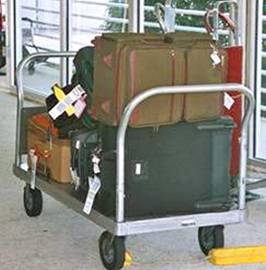
Waiting for a taxi she has called, a woman stands in
front of Terminal 3 of New York’s JFK airport. Beside her are suitcases on an airport luggage
cart. A Finnair van stops in front of the
luggage cart and the driver gets out.
She watches as he cuts off the “Omaha (OMA)” destination tags, puts on
“Helsinki (HEL)” tags. He puts all the
bags in the van and drives away. It begins to sprinkle. The woman takes one last look at a picture in
the magazine she is holding, before dropping it in a nearby wastebasket and opening
her umbrella. A few minutes later, a man
walks out of the airport and stops at the empty luggage cart. He looks at the sky, looks around, walks quickly
to the wastebasket, takes the magazine out, puts it on top of his head for protection
against the rain, and returns to the luggage cart. “Looking for your luggage?”
the woman asks. “Yes,” the man says. “A Finnair van just took it
away to Helsinki.” “They were supposed to take
me with it. I haven’t seen that luggage
since I left home. I was without it in
Omaha, and now it’s on its way to Helsinki without me. If I ever get my hands on it, we’re going to
have a serious discussion.” The woman laughs. “Perhaps I can help you. Would you like to share my umbrella? That magazine isn’t much use in the rain.” “Thanks,” the man says and
steps under the umbrella. “Would you like
me to hold it?” he asks. She nods, hands the umbrella
to him, takes her phone out of her bag, and dials. “I’m calling the number on
the Finnair van,” she says. When the phone connects,
she hands it to him. “I’m calling about my luggage,”
the man says. A pause follows. “Hold on,” the man says. He hands the phone back to
the woman. “They want my baggage claim
number.” He reaches into his coat pocket
and takes a ticket out. She holds the phone
up to his ear. He smiles at her and reads
the number into the phone. A pause follows. “Thanks,” the man says into
the phone and puts the ticket back in his pocket. The woman puts the phone back in her bag. The man shakes his head. “The luggage left for Helsinki without me. Left without a word.” The woman smiles. “How did your remember the
telephone number on the van?” He chuckles.
“You’re either a card counter or a CPA.” “The latter.” “Oh.” They stand for a while watching
the rain. “Certainly is warm for December,
isn’t it,” he says. “It is.” Several minutes pass. “Do you do taxes?” he asks. “No.” “Oh.” After a few moments, the man
says, “Where are all the cabs today?” Soon a taxi pulls up. The driver lets the window down and asks, “Rockefeller
Center?” “Yes,” the woman says. She looks at the man. “Where are you going?” “Terminal 8” The woman looks at the taxi
driver. “Can we go by Terminal 8 and drop
him off?” The taxi driver nods. The man opens the door,
holds the umbrella over it while the woman gets in, walks around to the other
side of the taxi, and gets in. They ride in silence. As they pass Terminal 7,
the man takes the magazine from his coat pocket and puts it on his lap. “I’m getting my umbrella ready,” he says. The woman looks down at the
magazine and smiles. The man glances at the open
magazine. He looks out the window. He looks at the magazine again. He looks at the woman and
then at the magazine. He looks at the woman and
says, “Is that you?” He points to the picture in the magazine. The woman looks at the picture. “Yes,” she says. “Boy, I’ll bet you were cold.” “I was. They had to airbrush the goose bumps and tone
the purple off my skin.” “I mean the least they could
have done was to let you wear one with fur on it. How long did you have to sit on that block of
ice?” “It seemed like forever,”
she says. “I’m not taking anything away
from your picture—you look great—but what’s the point of advertising swimwear
in the snow in Alaska?” “It was Milwaukee.” “It might as well have been
the North Pole,” the man says. The taxi stops and the driver
says, “Terminal 8.” The man starts to open the
door, but pauses and looks at the woman, “I just have to know. How did a CPA end up sitting on a block of ice
in the snows of Milwaukee wearing nothing but a tiny bikini?” The woman chuckles. “It’s a long story.” The man smiles. “Thanks for the ride,” he says and reaches for
the door handle. He hesitates. He turns back towards the woman. She is looking at him. Their eyes meet. At that moment, without conscious thought or
plan, their unblinking eyes say the words and their pounding hearts understand
the message of what could be. After several moments the
man quickly turns away. He opens the taxi
door, puts the magazine under his coat, and with one hand held above his eyes
to shield them from the rain and the other holding his coat tight over the magazine,
dashes towards Terminal 8. |

|
A week after leaving the airport, the woman has an accident
which leaves a narrow scar along the top of her left cheekbone. Concerned about the scar, she transitions from
a part-time model/part-time auditor to a full-time auditor. Now, seven months after the accident, she is
sitting on a sofa in her apartment showing a friend an old photo of a boy and
girl she had just enlarged and framed. “This was taken when I was
in the sixth grade in Omaha,” the woman says.
“She points to the boy in the picture.
He was the boy next door. He moved
in a week before sixth grade and was in my class. We were best friends,” the woman says,
handing the picture to the friend. The friend takes the picture. “Either you were tall or he was short.” “I was tall, the tallest person
in the class, and forever growing taller.
It bothered me, but it didn’t bother him.” “You don’t look anything like
you did then,” the friend says. “The summer after the ninth
grade, we moved from Omaha to Myrtle Beach, South Carolina, where I underwent
a physical transformation. My dad got me
a job as an assistant lifeguard at the Pavilion. He thought it would help me find some friends
before school. Well, I don’t know what
was in the sunshine there, but my body exploded. This time it was out instead of up. I had to buy a larger swim suit almost every
week.” The friend laughs. “I’m packing my bags tonight.” “Life is full of surprises,”
the woman says. “Until we moved to Myrtle
Beach, I never had a date and was teased all the time about my height—and being
skinny. Other girls had cute nicknames
or hot nicknames. Mine was “String Bean.” The only thing that kept me going was the belief
I would grow up to be a famous fashion model.
The following summer I won the “Miss Myrtle Beach” contest, but didn’t
go any further because I didn’t have any talent—other than sports, numbers and
strutting on and off a stage. The next
summer, I entered the “Miss South Beach” contest in Miami because the first prize
was a modeling contract.” The woman chuckles. “Back then, they gave you a next-to-nothing,
two-piece string-thing and then it was up to you. We were supposed to go on stage in last-name
alphabetical order, but being young and inexperienced, I was constantly bumped
until I was the last to go on which is a no-no. By then the audience is jaded and could care
less about another thing in a string.” She pauses. "Anyway, as I came on
stage, the audience—which was all male except for my mother—didn't make a sound. I thought, “I can't be that bad.” I didn't look at the audience the whole time
I was on stage. I was afraid somebody would
laugh. The three guys on the stage asked
me a few questions then told me to walk back and forth across the stage. When I finished, they said, 'One more time and
you can go home.' I was almost off stage when the spell broke. Those sex-starved men regained consciousness
and delivered the noise. I was the new
Miss South Beach. My mother was scandalized. Afterwards, when we were in the car, my mother
said, “Where did you learn to walk like that?” She didn’t realize I had spent
hours in my room pretending to be a high-fashion model. The imaginary runway in my room was short,
so I had to walk slowly. “ The woman pauses for a moment
before saying, “Being good at strutting in a swim suit made me Miss South Beach,
but not a fashion model. As I worked the
modeling contract I had won, I realized I could never be a fashion model. I was in demand for swimwear and lingerie,
but too full for the type of modeling I had always dreamed of doing: high fashion
runway . . . but I never gave up trying.” She touches her scar. “There is no use trying anymore.” The friend says, “Why don’t
you look on the bright side? Instead of
sitting around the apartment all weekend, why don’t you go out with some guys?” “With this?” She touches her
scar again. “It bothers me so much that
I wouldn’t even go to the gym if it weren’t for my conscious.” “Listen, you’re making too
big a deal about the scar. Darren has asked
me several times if he can introduce some of his friends to you—and they are attractive
men. Hearing you were a lingerie model
has gotten their attention.” “I know,” the woman says. “And that’s the problem. Before God reinvented me, boys didn’t know I
existed. The reason that picture means
so much to me is because it was the only time in 15 years, a boy liked me and
made me feel special—15 years!.
Even now, after all these years, I can still remember the moment when he
said he liked me the best and wanted to know if I liked him the best. He’s still in my heart. A lot of girls liked him the best, but it was
me he liked the best.” The woman pauses. “After God reinvented me,
all the boys liked me the best, but it wasn’t me they liked best, it was my face,
my body.” “You should be thankful for
what you have,” the friend says. “Believe me, I am thankful. Very thankful. I know what it’s like not to be attractive,
and I never want to ever go there again.” After a few moments, the woman
says, “You’re right. I have to stop being
vain and forget about the scar.” The friend hands the picture
back to the woman. “He’s cute. What happened to him?” “I often wonder that myself. His name was Jimmy Smith, so there’s no way
to find him on the internet although I have tried so many times. His mother was nice too. Both my parents worked, so I spent a lot of
time at his house. His mother and I made
clothes for me; we baked all kinds of things, cookies, cakes, pies, bread.” She smiles. “Jimmy would always eat the cookies when we
weren’t looking. His mother even taught
me to ride a boy’s bike. Then she taught
me to ride with no hands. I thought it
was so cool when Jimmy and I rode down the street together on our bikes with no
hands. Unfortunately, they moved the summer
after the sixth grade . . . and didn’t leave a forwarding address. I cried my little heart out.” The woman’s phone rings. “Hello,” she says. “Helen?” “Yes” “Thank goodness. Are you at home? This is Rosemary from Athena.” “Yes.” “I have a show for you—tonight. I took a chance and sent a limo. It should be there at any moment. I apologize for the panic, but I’ve been out
of town for several weeks and didn’t get to the office until this afternoon. The first letter I opened was from Paris. The designer Claude d’Orlean said he had been
trying to get me by phone without success.
Claude is well known in Europe and Scandinavia, and is now turning his
attention to the U.S. with a big show in New York tonight. He specifically requested you by name in his
letter.” “Aren’t you forgetting my
scar?” “Don’t worry about that. I have a check in my hand for $15,000. The letter says all you have to do is introduce
yourself to Pauline, the runway coordinator, and the check is yours.” “Sounds good to me.” “How is your figure?” “The same.” There is a pause. “Helen?” “Yes.” “Good luck.” |
|
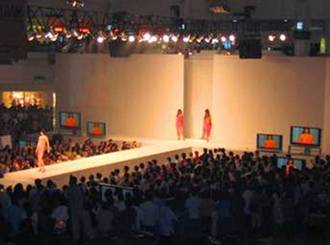
Helen arrives as
the show is about to begin. She finds the
runway coordinator and introduces herself. “Pauline, my name is Helen Jones. I have a letter of introduction from the Athena
Agency.” Without taking the letter, Pauline looks her over and
says, “Follow me. Claude is expecting you. He will be the first designer Delgado has allowed
to show one their handbags, and Sylvia Delgado, herself, told him you were to
show it.” Squeezing their way through a noisy, frenzied crowd of
models and staff preparing for show time, Helen shouts to Pauline, “This has to
be a case of mistaken identity. I’m a lingerie model. I’m 26 years old. I can’t fit into a size 4, and Sylvia Delgado
doesn't know I exist.” Pauline shouts back, “Eighty percent of Claude’s sales
are through Delgado stores. When Sylvia
talks, Claude listens. We’ll let him worry
about it.” They take a few more steps, and Pauline stops. “Your fee is now guaranteed,” she says. “You can go back if you want. All obligations have been met. I will explain your situation to Claude. He and Sylvia will understand completely. There will be no bad feelings.” “I’m not here for the money,” Helen says. “I’m here to walk the runway.” They find Claude on his knees adjusting the length of
a model’s dress. Pauline says,” Claude,
the Delgado girl is here.” Without looking up, Claude says, “Have her select a bag,
find a dress that matches, and slip her in during the middle of the show.” “We don’t have any dresses that fit her.” Claude’s mouth tightens, and he looks up at Helen. Then he stands up. He looks closely at her face and says to a man
standing nearby, “Gerald, take her to makeup.
Tell Evelyn to remove her makeup and accent her natural color. That’s all that needs to be done.” Touching her face with a finger, Helen says, “But I have
a scar.” “Where?” Claude asks. She turns her head slightly and points. “Here.” Claude looks at the people around them and rolls his
eyes as if Helen is being ridiculous. He turns back to Helen and smiles. “But dear girl,” he says. “It’s irrelevant.” When they return from makeup, Gerald says, “Wait here. I’ll tell Claude you are ready.” While she is waiting,
Helen hears the models coming off the runway saying the audience’s reaction is
mixed—not a good sign for a designer trying to break into a new market. She knows Claude must blend his remaining offerings
in a way that will bring the audience’s focus back to the show’s theme and an
understanding of how all the pieces fit together. The show is past the midpoint when Claude and Gerald
return to Helen. “Stand still,” Claude says to Helen. “I want to get a good look at your face and
the back of your head.” After walking completely around her, Claude says, “Walk
to the other side of the room and back.
While you’re walking, I want you to imagine you are walking along the bar
at La Chic in Paris. You are going to the
back dining room, and you don’t intend to dine alone.” As Helen walks towards the wall, Claude says in a low
voice, “My My.” Gerald gives Claude a sharp look. “She’s a model. All models walk like that.” Claude shakes his head. “Not like this one . . . she won’t dine alone.” When Helen returns, Claude says, “Would you please strip
to your thong and take that walk again.
I want to make a sketch. Gerald,
hand me my sketchpad and get Ruth. Tell
her to hurry; we’re running out of time.” As Helen walks, Claude sketches. Ruth arrives and says, “Did you want me?” Pointing to the sketches, Claude says, “I want you to
cut to fit using this fabric.” “Claude, it’s impossible. I can’t make that dress before the end of the
show.” “All you have to do is cut to fit using the dimensions
on the sketch. I’ll staple and tape the
pieces together on her right here. Hurry
now.” Claude has the
dress on Helen by the time the last scheduled model starts down the runway. Claude says to Helen, “You will go on when Sonja returns. While you’re walking down the runway, don’t
smile. When you get to the end of the runway,
give a full thrust with your left hip like this,” demonstrating the full thrust. “Then pivot and give a full thrust with the
right. This will show the dress and the
bag to both sides of the audience. Give
it a try.” Helen does the left and then the right thrust. “Once again please.” She does it again. “Perfect. After
the right thrust, face the front for a moment. If the audience appears to like the dress,
give a smile. If not, don’t.” The model returns through the runway arch and passes
Claude without looking at him. “It now appears,” Claude says, “the only thing separating
me from fame or failure is a look and a prayer. So beautiful one, once again, walk along the
bar at La Chic, and I’ll do the praying.” Helen passes under
the runway arch, pauses for several seconds, surveying, seducing the audience
with her eyes, pulling it to her before beginning her walk down the runway. Look straight ahead.
Left foot. Right foot. Left foot.
Right foot. The buzz is getting
louder. Has the tape come loose? Block it out. Block it out. It’s getting louder. Block it out. Block it out. Left foot.
Right foot. Left foot. Right foot.
There’s scattered applause. More
applause. Block it out. Don’t smile. Left foot.
Right foot. Pivot. Left thrust. Pause.
Pivot. Right thrust. Pause.
Front. A man is standing up and
applauding. The man from the airport! Now everyone is standing and applauding. Smile.
Who is he? |
|
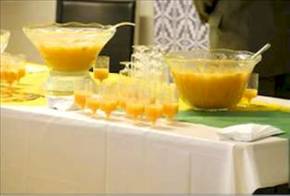
The show’s after-party
is held in the main ballroom of a leading Manhattan hotel. Claude, his staff, and the models are in the
center of the crowded room under a large banner with the show’s theme, “American
Beauty,” embroidered on it. With cameras
flashing in front of them, Claude is standing with Helen, his arm around her shoulders. Helen is smiling, but her eyes are searching the room. He’s here.
I can feel his presence. But where? A publicist says, “Claude, how about a picture with you
and all the models we can pack into a frame.” Claude holds Helen’s hand while all the models squeeze
together. The cameras flash. After several more shots, the publicist says, “Let’s
get a few with Claude and his staff.” Releasing her hand, Claude winks at Helen. “Thanks,” he says. Claude motions for Gerald to stand beside him. As Helen walks through the crowd, people congratulate
her, touch her arm or shoulder, seek to engage her in conversation. Talking briefly with each one, but quickly disengaging,
she moves on through the crowd. She stops;
her heart racing. In the shadow of a column
in a far corner of the ballroom, standing alone, is the man from the airport. He smiles and waves to her. She waves and walks to him. “Hi,” he says.
“Can I get you a glass of punch?” “That would be great. Thanks.” He returns with the glass of punch and hands it to her. “Thank you,” she says. They stand silently for a few moments. “I want to thank you for standing and applauding,” she
says. “It started the chain reaction that
saved the show.” The man shakes his head. “You were a force of nature tonight. Completely unannounced, totally unexpected. The barometer stopped falling when you walked
onto the runway in that knockout-hot dress. It was rising when you paused and surveyed the audience,
seducing them with your face, your eyes.
You were a siren, and the audience couldn’t turn away. Every step of that slow strut pushed the barometer
higher. By the time you finished, the barometer
had pushed through the top, and a tsunami was sweeping through the audience pushing
aside all that had happened before. I was
riding the crest that’s all.” “I imagine you were as surprised to see me as I was to
see you.” “I didn’t recognize you,” he says. “I was thinking, ‘I don’t know who she is,
but she—is—good! Stand-up-and-applaud good! So, I stood up and applauded like hell.’” He smiles. “You
looked very different in a business suit and a rain coat.” Helen chuckles.
“I guess so.” “When the show was over,” the man says, “I turned on
my cell phone, logged on to the internet, and asked Google, ‘Who was the last
model?’ I was thunderstruck when the answer came back, ‘She is the woman from
the airport.’” Helen chuckles.
“Google is amazing, isn’t it.” The man says, “Next, I asked Google, ‘Who is the woman
from the airport?’ My hands were shaking as Google answered, ‘In the twelfth grade,
you sent her a letter and picture which came back ‘Address Unknown.’ The day after
you graduated from college, you flew from Italy to her house in Omaha, but the
owner, Mrs. Flowers, said she had moved from Omaha seven years before. The day before you met her at the airport,
you had flown from Italy to Omaha again in the hopes Mrs. Flowers could find out
from neighbors where she had moved. She
was the only girl in the sixth grade who could ride a boy’s bike with no hands. Tell me.
Can you still skip a skateboard?’” Helen turns away. After several moments, the man says, “I have no idea
why circumstance choose to bring us back together, but I’m not asking questions
or worrying about the future. I’m living
each moment and keeping my fingers crossed.” Helen turns back to the man. “I’m sorry.
I lost my composure.” “Can I get you another punch?’ “I’m OK now.
You’ll have to forgive me for not recognizing you, but you’re so tall and
. . . manly. Not at all what I thought
you would look like.” “You’re quite womanly yourself.” After a few moments, Helen asks, “Do you go by Jim or
Jimmy now?” “Whichever you prefer.” “Jimmy.” He smiles. “How did you really find out who I was?” Helen asks. “After everybody left the show, I was still sitting in
my chair trying to sort things out. The
bag you showed looked like the Versailles, a bag we hadn’t released. I had been in Australia when I received an urgent
message from Claude’s office saying it was of the highest importance I attend
tonight’s show. Since our policy is not
to show bags, I thought the message was related to the bag. Only Mom or I could make an exception to that
policy, and she wasn’t answering her phone.
Even so, showing a bag certainly didn’t require my suspending negotiations
and flying to the U.S.” He pauses. “But it was you that concerned me. I kept thinking, “I know that face. I know that beautiful face.” At that point, I took out something I carry
on me at all times.” He reaches into his pocket, takes out a folded white
envelope, opens the envelope, and takes out a picture. “Do you remember this?” She laughs. “Of
course. It’s me freezing my bottom off
in Milwaukee.” “The instant I looked at the picture, I knew you were
the woman from the airport. My adrenalin
was on a rampage. The search was finally
over. This beautiful woman with a CPA;
who sits on a block of ice in the middle of winter almost naked; who excites a
crowd of jaded critics as she slowly struts the high fashion runway. What identity would she assume next? Shortly after that, I made contact with Mom
and learned who you really were . . . the strangest identity possible.” They stand silently until Jimmy says, “There is something
I want you to know. It’s a story that is
intertwined with and drives another story, so there are two stories to tell. They are stories I’ve been rehearsing in my
mind for a very long time, but I want to tell them right since I’ve been rehearsing
them for you. Unfortunately, at the moment
I’ve been waiting for, I’m being attacked by jet lag in the extreme; it’s hard
to focus on anything, but going to sleep.
You should be getting back to the party. Tonight is a long way from that block of ice
in Milwaukee. Enjoy your success. Make some contacts.” “Could you join me for a little while?” Jimmy shakes his head. “I wish I was up to it. Tomorrow afternoon I’m watching the finals of
the U.S. Open, and tomorrow night I’m back to Australia to pick up where I left
off before I received Claude’s message.” He pauses. “Please don’t think I’m putting you off for any reason
except exhaustion. I can hardly hold my
eyes open.” They stand silently for a few moments. “Let’s get together tomorrow.” he says. “We could have lunch and then watch the Open.” “I would love to, but I don’t have a ride home. Claude arranged a limo to take me home in the
morning.” “Where do you live?” “Philadelphia.” “No problem.
I can drive you down. I’ll catch
a flight from there to L.A. and then to Perth.” Jimmy takes a business card from his pocket,
turns it over, and hands it to Helen.
“This is my cell number. Call me
when you are ready in the morning. The
earlier, the better.” Helen glances at the telephone number and puts the card
in her purse. “OK.” Jimmy leaves,
but Helen lingers, looking at her glass, reflecting on their conversation,
trying to put all the pieces together, when she is approached by another model. “Hi Helen. My
name is Sonja. I was on the runway just
before you.” “I remember you.” “I guess I can tell you now. After you went out to the runway, Ruth said
‘That poor, unfortunate girl. The tape
is not going to hold.’” Helen laughs. “It took courage,” Sonja says, “for you to walk the runway
solo knowing the audience was undecided, that your physical profile was different,
and your dress was a gamble. I just wanted
to congratulate you on your success and let you know I was impressed.” “Thank you.” After a pause, Sonja says, “I saw you talking to Jim
Delgado.” “Who?” “Jim Delgado.
Don’t you know him? His mother picked
you to show their bag.” “I'm confused.
Do you mean the man I was just talking to?” “Yes” “I knew him 14 years ago and bumped into him by accident
one day some months ago. We didn’t recognize
each other at the time. We took a short
taxi ride together, and that was it. I
didn’t think I would ever see him again.” “There is a brief silence before Sonja says, “I saw him
say something which made you turn away.
Be careful. I’ve seen him in action. He’s a lady’s man—as smooth as they come—a real
salesman—which is to be expected since he built his family’s small leather goods
store in Florence into the Delgado retail empire of today.” “You’ve seen him in action?” “I shouldn’t have said that.” “It’s OK,” Helen says. “At this point, we are strangers . . . and I
can leave it that way.” “I understand.
Until tonight, I had only seen him one time close up. It was at a friend’s wedding reception last
December. Everybody was getting high on
Jaloviina when a more-than-male-model-handsome man suddenly appeared at the doorway. The room was full of beautiful people, but when
he walked in, every head turned. The girl
next to me said, ‘That’s Jim Delgado.' What in the world is he doing at a wedding
in Helsinki, Finland?” “What was he doing there?” “The groom’s mother was a Delgado.” “What happened?” “Some local princess-or-other was the first to reach
him. An attractive princess. And athletic. Her body pressed his nonstop, and her mouth
ran nonstop the instant any other pretty mouth tried to open. I was certain the princess was going to take
it all off right there at the party, that’s how smooth he was.” After a brief pause, Helen asks, “Did he leave with her?” “No. He left alone
when the princess took a powder break.
He apologized to the groom’s mother saying he had to leave right away because
urgent business had just come up in the States. But I’m sure that was only a pretense. I’m sure he had another woman waiting for him
at his hotel—even more attractive than the princess.” After the party,
Helen calls her father. “Hi Dad. I know
this is a late call, but I need to know something or I won’t be able to sleep
tonight.” “It’s OK. I was
just dozing in front of the TV.” “Dad, do you remember the Smiths who lived next door
to us in Omaha when I was in the sixth grade?” “Yes.” “Wasn’t the mother’s name Sylvia?” “Yes. That’s right.” “Do you remember who bought our house when we moved?” Helen’s dad chuckles. “April Flowers. It’s a name you don’t forget. What’s the sudden interest in Omaha? Did you run into Jimmy Smith?” “I’m not sure.
I think so.” “I imagine he would be quite tall now since his mother
was tall, and his dad was a little taller than I was. Jimmy probably shot up about the same time you
were filling out.” |
|
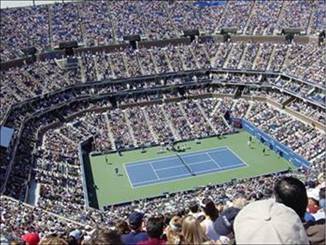
Sitting courtside,
waiting for the final match of the U.S. Tennis Open to begin, Helen and Jimmy
are picking up where they left off 14 years ago “ . . . so those are the two intertwined stories: my
search for you and the rise of Delgado.” “What an exciting adventure you’ve had. My ego is thrilled to know it was Helen Jones—me—Helen
of Omaha, Nebraska —not Helen of Troy who was in your thoughts as you created
Delgado. It’s also nice to know your mother
helped you find me. I remember we had so
much fun together. She had a great sense
of humor.” Helen pauses. You know, I’ve been looking for you too.” “You have? Since
the airport?” “Since the sixth grade.” Jimmy stares at her for several seconds. “We are finally together again,” he says. “That’s all that matters.” They sit in silence for a while. “Do you play tennis?” he asks. “Not since college.
How about you?” “The same. When
I return from Australia, we could . . . ” He feels a hand on his knee and turns. A tan, tall woman in a low-cut sundress is standing in
front of him. She takes off her sunglasses,
bends down close to his face, talking slowly, quietly, seductively, and slowly
rubbing her hand up-and-down the calf of his leg. He turns his face away from the woman, nods
slightly occasionally, doesn’t smile, doesn’t say anything. After a few minutes, the woman straightens up,
smiles, pats him gently on the cheek, and walks away. There is a moment of silence before Helen says, “I don’t
speak French, but if she had been a fraction of an inch lower, those atomic bombs
would have launched, and you would have two black eyes.” “She’s from my old life. I’m not like that now. At the end of our taxi ride at the airport,
I had an epiphany which changed my ideas about women.” Helen doesn’t say anything. “I had always heard epiphanies were sudden,
life-changing insights accompanied by thunder, lightning, and the ringing of bells,
but mine was different. It slipped in while
I was under the umbrella and didn’t say a word. When I started to open the taxi door, I realized
I didn’t want to leave you, so I turned back.
The moment I looked at you, my epiphany struck. You were from somewhere far away. A strangely different woman from an unknown
place. But we were together. We were one.
The emotion was overwhelming. I
didn’t know what to do, what to say; so I ran away. When I got my senses back, I immediately set
out to find you and apologize for being so rude. And, perhaps, to make amends in some way.” “I see.” He shrugs his shoulders. “What can I say? It was a great feeling. It was just that I was blindsided and couldn’t
handle the rush.” “I believe you.”
She pauses. “I felt it too. Big-time.
There was no controlling the message I was sending you, but I didn’t care. I didn’t want it to stop.” There are a few moments of silence. “I bought the dress you wore at the show,” he says. “Unfortunately I can’t take physical possession
of it until October. “Why?” “Claude is going to ask you to wear it at his show in
Paris.” “I mean, why did you buy it?” “When you started to walk, that dress came alive, a mirage
glowing red-hot on the runway. I had seen
dresses that made a woman’s bust bounce, dresses that made a woman’s bust jiggle,
but until you walked the runway, I had never seen a dress that made a woman’s
bust vibrate.” “So why did you buy it? It’s not your size.” He hesitates for a moment. “I want to see that dress walk down the hallway and across
the room.” “The bedroom I suppose.” “Since you ask,” he says. “Yes.” Helen doesn’t say anything. After a long pause, Jimmy asks, “Have you been to Florence?” “No.” “Mom asked me to find out if you would be able to go
there and spend some time with her. She
wants to show you Italy and, if you have the time, Switzerland and France.” “I don’t think so.” “This isn’t a come-on. The invitation is only for you. I’m excluded.” “I said, ‘No.’” Jimmy takes out his cell and dials. The phone rings and rings until a woman’s voice
finally answers. “Sorry to wake you Mom, but I have Helen on the line.” He hands the phone to Helen. |

https://firewire-connects.com
https://firewire-fiction.com
Copyright © 2008 by FireWire
All rights reserved, including
the right to reproduce this story or portions thereof in any form whatsoever.
 is a
registered trademark of FireWire.
is a
registered trademark of FireWire.