|
|
A
Brand New Ending By FireWire |

Story
No. 5

|
A woman holding a suitcase, poised to walk out the front
door of her apartment, hears her cell phone ring. She puts down the suitcase and looks at the
phone. It’s mother.
Now what! If I had any sense, I
would keep walking. She has just one thing
on her mind. “Susan honey” she’ll say. “Listen to your mother. I know what I’m talking about. A pretty face will only get you so far these
days. You should get falsies or a pushup.” Or else she will say, “So-and-so’s daughter,
a real plain Jane, got implants—now her telephone doesn’t stop ringing.” Why does she keep harping on it! She knows I don’t have anything to push up. When the moment of truth comes, it’s either “Wow! You really are flat.” or it’s “You look great,
but aren’t you missing something?” If I got implants, it would be “Mmmm. What are those
scars?” or “These feel funny.” or “You got balloons, right?” The woman holds the phone until it stops ringing and
puts it back in purse. She picks up the
suitcase and starts to close the door.
The phone rings again. This time
she answers. “Mother,” she says, “I’m walking out the door.” “Oh good. I caught
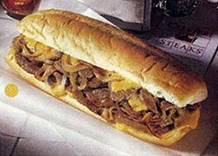
you in time. Would you deliver some cheesesteaks
to Mrs. Blessing’s daughter, Jill, in New York?” “I’m not going to New York City; I’m going to White Plains.” “Mrs. Blessing says its right on the way.” “It’s not. I bypass the city altogether.” “I’m sure it isn’t too far out of the way. Mrs. Blessing is such a good friend. She said she will pay your gas both ways.” “Why doesn’t Mrs. Blessing FedEx the cheesesteaks to
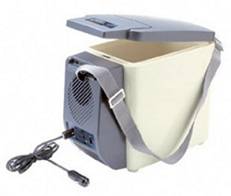
her daughter?” “She tried that, but Jill said they didn’t taste right. Mrs. Blessing has a food warmer which plugs
into the car’s cigarette lighter to keep them warm.” “Mom, you must be kidding. Nobody in their right mind would go to all the
trouble and expense to send their daughter a cheesesteak.” “Mrs. Blessing said she and Jill had an argument,
and Jill isn’t talking to her. Jill loves
South Philadelphia cheesesteaks, so Mrs. Blessing is hoping this will break the
ice.” “Mother. I’m not
a cheesesteak delivery guy; I’m going to a wedding. Anyway, I have no idea of how to get around
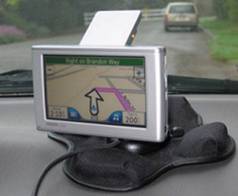
New York in a car. I always used the subway.” “Mrs. Blessing said you could use her GPS.” There are a few moments of silence. “Please do this one favor for me honey. Mrs. Blessing does a lot of nice things for
me. This is the least I can do for her. She has everything ready for you. She said it will only take a few minutes to
put the cheesesteaks in the car, and the GPS is programmed.” “All right. I’ll
do it.” |
|
The woman arrives in New York, becomes lost, and dead-ends
on the edge of a river. Worried she will
not be able to find her way out of the city, she looks around for help and sees
a man sitting on a bench on the lawn of a modern high-rise. The woman backs up to the curb in front of the man and
rolls down her window. “Pardon me,” she
says. “I’m from out of town. I’m trying to locate Avon Avenue.” The man doesn’t look her way. “Yoo-hoo.” “Sir.” “Yoo-hoo!” No response. She pushes down hard on the car horn. The man jerks to attention. The woman sticks her head out of the window. “Hello.
I’m trying to locate Avon Avenue.
Can you help me?” The man looks at her without moving. “I from out of town,” she says. “ . . . I’m lost.” The man walks to the car. “Aren’t you using your GPS?” he asks. “Of course. That’s
why I’m here.” “Well, this isn’t Avon Avenue.” “I know. Is it
close by? Could you please give me directions?” “Yes and no.
It’s about ten minutes northwest of here, but it’s complicated to get to. It’s easy to miss.” After staring at the GPS for several moments, the woman
looks at the man and says, “I’m on my way to a friend’s wedding in White Plains.” She points to the warmer in the back seat. “My mother talked me into delivering a bunch
of cheesesteaks to one of her friend’s daughter. If I don’t find her soon, I’ll be late for the
wedding. Would you have the time to ride
with me over there? I’ll run in, deliver
the cheesesteaks, run out, and bring you right back. It will only take a few minutes.” The man looks at her as if she is a recent release from
an institution. She shrugs. After a moment, the man says, “Might as well. Time is all I have left now.” He walks around the back of the car and opens the front
passenger door. “Why don’t you drive?” she says. “It would simplify the process.” The man nods and walks around the back of the car while
the woman walks around the front. |
|
When the car stops, the man asks, “Would you like me
to carry the warmer in for you?” “Yes, thank you,” the woman answers. A blonde woman answers the doorbell. “Jill?” “Yes.” “Jill, I’m Susan Westerfield. My mother, Ruth, is a friend of your mother. I’m on my way to a wedding in White Plains,
and your mother asked me to drop off these cheesesteaks for you.” “What a surprise,” Jill says. “Thank you so much. There are some places around here which claim
to make Philadelphia cheesesteaks, but if they don’t come from South Philly they
might as well come from China as far as taste goes. Please come in.” After they enter the kitchen, Gavin puts the warmer on
the counter. Susan says, “Jill, this is
. . . ” Extending his hand, smiling, making eye contact, the
man says, “Gavin.” Taking his hand, maintaining the eye contact, Jill says,
“Thanks for bringing the warmer in Gavin.
I’m sure it’s heavy. They really
pack a cheesesteak in South Philly.” Gavin releases Jill’s hand and looks at Susan. “I’ll wait in the car for you.” When he leaves, Susan says, “Your mother sent these as
a peace offering. I hope my trip won’t
be in vain.” “I assure you it won’t. By the way, your boyfriend is a very handsome
man. And charming.” “Oh, he’s not my boyfriend. I don’t even know him. I was lost down by the river and asked him for
directions. He said the directions were
complicated, so I asked him to drive me here.
As soon as I leave, I’ll drop him off and be on my way. He showed me the freeway on the way over.” “For real?” “Yes. We passed
right over it.” “I meant Gavin.
Don’t you have any interest in him?” “None.” “You’re sure?” “Positive.” “In that case.”
Jill takes a piece of paper out of a kitchen drawer, writes on it, and
gives it to Susan. “Please give this to
him. It has my name and cell. Tell him I want get my hands on him – all over
him. No kidding, tell him that.” Opening the warmer, Jill takes out a wrapped cheesesteak. “Here.
Take this for the trip. It’s still
a ways to White Plains; you may get hungry.
I can’t thank you enough.” |
|
Susan gets in the car and holds up the cheesesteak. “She gave me one for the road.” Gavin says, “Unbelievable as it may sound, I never heard
of a Philadelphia cheesesteak until now.
Probably because my trips to Philly were limited to evenings at the Entertainment
Center.” Arriving back at their starting point, Susan says, “Thanks
for helping me. As a reward, I’ll give
you the cheesesteak. After you eat it,
you’ll be in the know.” Gavin rubs his chin.
“Why don’t we split it? We can go
up to my place, sit out on the balcony, and watch the river while we eat.” “I can’t,” Susan says. I have to be in White Plains no later than six
for the rehearsal.” “You have plenty of time. Hop on the freeway, and you’re almost there.” “Well, OK.” |
|
Gavin inserts a key into the elevator control panel by
the label “Penthouse.” When the elevator
stops, it opens to a foyer with one residence door. Opening the door, Gavin gestures for Susan to enter first. “Whoa!” Susan says.
This place is huge. It looks like
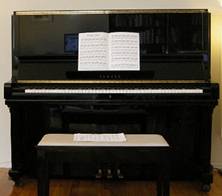
a concert hall.” “I guess it does with only a piano in it. A few days ago, it was full of furniture. Now, all that’s left is my old piano and two
lawn chairs. Tomorrow, I won’t even have
that. But, considering we are now in the
present, let’s go out on the balcony and enjoy our cheesesteak.” “How do you like it?” Susan asks. “It’s good. I
like it.” They finish the cheesesteak and sit in silence for a
while watching the river. “Where are you moving?” she asks. “No idea. This
is my first time going bankrupt and being thrown out on the street. I’m playing it by ear.” “Bankrupt?” “Right. Bankrupt. Fortunately, the judge let me swap my car for
the piano, but a lot of good that did me.
I don’t have any money to store it, so I’ll have to walk away from it in
the morning. My mother gave it to me when
I was 13 because I wanted to learn to play the piano. She even arranged for the church organist to
give me lessons. And now I’ve violated
the trust she had in me. She scrimped and
went without so I would have this piano.
Tomorrow her faith and hopes in me will be left in this room when I walk
out.” “What happened?” “Blindsided by the real-estate meltdown. I was a promoter of musical events - rock,
opera, Broadway musicals, off-Broadway musicals – you name it. I brought all the parties together and staged
the events. I always had three or four
events going at one time and brought in investors to supply the up-front money
to pay for everything. If I did my job
right, my investors and I made a lot of money. If I didn’t, my investors lost money. “So some of your shows were flops?” “No. Not at all. My investors were. They were up to their necks in real estate loans
which turned bad all at once when the real estate market collapsed. They didn’t invest and I couldn’t meet the contracts
I had signed.” “Couldn’t you borrow from a bank?” “No. My line of
work is too speculative for a bank. Too
speculative even for a bailout.” “That’s terrible.” “My thoughts exactly. Tomorrow is not going to be fun. No car, no roof over my head. I don’t know if I qualify for unemployment.” “Oh. I forgot
about Jill.” Susan hands Gavin the piece
of paper with Jill’s name and cell. “She
said to give you this. I’m sure she will
help you until you can things together.” He looks at the paper. “The last one left when she couldn’t charge
a pair of shoes on my credit card. She
said I was finished. She may have been
right.” He puts the paper in his pocket. “Thanks.” He walks to the edge of the balcony and looks towards
the river for a few moments before turning back towards Susan. Leaning against the balcony rail, he asks,
“What do you do?” “I work part-time for the juvenile courts of Philadelphia
and Camden County, N.J. as a counselor.
I lead support groups for parents of juveniles who are arrested on alcohol
and drug charges.” “That’s different.
How did you get into that line of work?” “I read a newspaper article where a juvenile judge said
parents had nowhere to turn for help when their children were arrested. I wrote the judge a letter and volunteered to
set up a parent support group. He asked
me to visit with him and discuss my offer.
At the end of our meeting, he arranged a room in the courthouse in the
evening for the group. He advertised the
group by putting a sign at the juvenile arrest desk. It’s voluntary for parents and doesn’t cost
them anything. Eventually he got city funds
to pay me on a part-time basis.” “How did your group make out?” he asks. “It was an instant success because there were so many
parents in need of help. But it’s strictly
self-help. A group usually consists of
10 to 15 parents with one or two new parents each time and one or two that don’t
come back because their need for support is over. The judge recommended
we adapt the AA method of support, so every meeting we sit in a circle with each
parent telling the group what caused them to seek support and sharing any solutions
which might help other group members. Some
parents new to the group can’t bring themselves to tell the terrible things their
children had done to them, but once they hear other parents’ stories, they find
they are not alone and share their experiences.” “How often do you meet?” “Monday through Friday. Each group meets once a week in the evening
for about two hours. I’ve expanded it to
five groups in different geographical areas by using church-furnished rooms. “How long has this been going on?” “Eight months.” “I guess you don’t have a social life, or if you had
one, you don’t have one now.” “I’m satisfied with how my life is.” He walks to his lounge chair and sits down. He leans forward. In a low voice, he says, “I like your T-shirt.” From deep within the most primitive part of the brain,
the amygdala fires. Traveling at 200 miles
an hour, an emotion pounds her heart, blushes her face, slams into her consciousness,
and takes control. She pulls her T-shirt tight across her chest. “Take a Look! See!
See Why I Don’t Wear a T‑Shirt!
I had no idea I would meet you!
No idea at all! I shouldn’t have
come here. I made a big mistake.” She moves to get up. Gavin holds up his hand. “Wait.
Stop. Please. I was referring to the words on the back of
the T-shirt. To ‘Philadelphia 2010 Open
Choir Champions.’” She pauses. “My mother also sang in the choir,” he says. At home, on many evenings, I would play the
piano, and she would sing hymns. I even
wrote some hymns for her to sing. She was
proud of me.” Looking into her eyes, he stands silently for a few moments
before asking, “I wonder, if, before you leave, you would be kind enough to sing
one of those hymns while I accompany you on the piano. It’s absolutely crazy I know, but, if you would,
my mind would be at ease when I walk out the door tomorrow. I would like to thank her one last time before
I leave the piano behind . . . even if her sacrifices came to nothing in the end.” He reaches into an envelope, takes out a hand-notated
piece of sheet music, and offers it to her. “Please,” he says. She takes the sheet. |
|
When Gavin is seated at the piano, he asks, “Can you
read the music?” “Yes. Your notations
are well done.” “Then shall we begin.” Susan is almost finished the hymn when she becomes aware
the piano is silent. She looks down and
sees Gavin looking at her. “Anything wrong?” she asks. “You have the sweetest voice I have ever heard—and I’ve
heard the best. But it’s also crystal clear
and strong. Emotionally powerful. How do you do that? You’re not an angel in disguise are you?” She laughs. “Hardly. It’s taken years of practice. I have a Bachelor of Music.” “From a school in Philly?” “From Juilliard.” He stares at her without saying anything. “Are you OK?” she asks. “Just taken aback.
Stunned, actually. The question
is, of course, why don’t you sing professionally?” “After graduation, I tried very hard to get work as a
solo singer, but found the job market for high-end solo singers was zero—all my
hopes and dreams would never be realized.
Four years of college wasted. That’s
when I wrote the judge. The only singing
I do now is with the church choir which is a very talented group. We won the Philadelphia Open Choir Championship
this year. The T-shirt was the prize. It’s actually a very prestigious prize. Do you have another hymn? I have time for one more before I go.” “I do have another one.” He goes to the porch and returns with another piece of
sheet music and a remote. He hands her
the sheet music. “What’s this?” she says. “This isn’t the title of a hymn. “It’s not gangsta rap if that’s
what you mean. It’s intended to be a modern
cupid’s arrow.” “Oh.” He reaches under the keyboard and flips a switch. “I added a synthesizer and some speakers to
the piano. That’s why it’s long in the
back. The accompaniment, which does not
include the piano, is prerecorded. Let
me know when you are ready.” She reads the sheet.
“Ready,” she says. He presses the remote. The beat penetrates her hips and moves to her shoulders. It lifts her feet to a stage where she shoots
word after word straight into a thousand hearts. The music stops.
She points the sheet music towards him and shakes it. “Man!
You can really write a song! That
was exciting!” He says, “I never imagined that was the way it had to
be sung. Nobody would have imagined singing it the way you did. I shopped that song to everybody I knew. I sent it to a dozen singers, a dozen producers. All without success. I even gave it to one of the groups I booked. A new group I knew needed material. The lead looked it over and said, ‘Where did
you get this crap?’” As Gavin speaks, he begins to cry. Susan sits down on the bench beside him. She puts her arm around him and slowly rubs
her hand up and down his side until the crying stops. “You’ve let it all out,” she says. “You’ve reached emotional equilibrium—come to
terms with your situation. Things will
be better now.” She takes her arm from
around him. “I’ve screwed things up real bad,” he says. “I don’t know how I will get started again. My reputation has been shredded, and reputation
is everything in my business.” She puts her arm around him again and holds him tight. “It’s time to pick yourself up and get on with
your life. No one can go back and change
the past, but you can start now and make a brand new ending. I don’t care what the others said about your
music. They are wrong. I know your music is good. I’ve experienced it. It penetrated deep inside me . . . and gave me hope.” He says nothing. “Listen—I believe in you,” she says. “Find a new way, and these things that upset
you now will no longer matter.” Another pause. “You're right,” he says. “I have to make a brand new ending.” She takes her arm from around him. “If I took your piano and stored it for you until you
were back on your feet, would that help?” He looks at her.
“What do you mean?” “I mean, if you can find a way to ship the piano to me
cash on delivery, I’ll store it in my mother’s garage until you are in a position
to claim it.” “You are an angel after all, but I can’t accept the offer. Shipping will cost a ton of money. I can’t ask you to spend money you don’t have.” “I have a credit card,” she says. “If you never show up, I’ll have a great piano.” He chuckles.
“You’ve got a deal. Give me your
mother’s address.” They leave the apartment and go to her car. Susan gets in and takes the keys out of her
purse. Gavin reaches in his pocket, takes out the paper with
Jill’s number on it, and hands it to Susan.
“I won’t be needing this. I’ll find
another way,” he says. She takes the paper, smiles, and puts the key in the
ignition. “Thank you,” he says. “For what?” “For what you did for me this afternoon. I’ll never forget a minute of it. I saw heaven, and I want more.” He pauses.
“Is there anything I can do for you besides making a brand new ending? Anything at all.” She puts her hand on the ignition key, “That’s it.” She pauses. Looking
straight at him, she says, “That’s it . . . . for now.” and turns the key. |
|
It’s Saturday morning. Susan sits at her kitchen table in Philadelphia
deciding which payment to skip this month – car, credit card, or rent. The phone bill is out of the question since
she has skipped it for two months. Another
missed payment, and it will be disconnected.
The phone rings. It’s mother.
She called yesterday. She needs
a hobby other than trying to add a double D to my top or whining about the piano. It’s only been in the garage for little over
a year. It’s not even in her way for crying
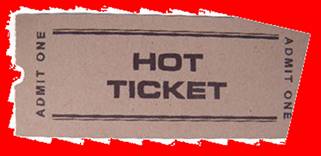
out loud. I should have stayed with him. He wanted me to stay. Together, we could have made it. What a fool I was. “Hello.” “Susan, you have a letter from the Nine-Thirty Club.” “Never heard of it.
Toss it.” “It feels like it’s got a ticket in it. Maybe it’s a free raffle ticket. That’s how people win big. When they least expect it. Then you could pay off all your debts.” “That's nice, but I can't talk now. I’m on my way to choir practice. Call you later.” That night Susan
gets another call. “Susan, this is Aunt Lois. Laura is driving me crazy. I know it’s late, but I can’t stand her anymore. Would you please, please, take her to some concert
she absolutely has to go to.” “Tonight?” “Tonight. Right
now. Can’t you hear her screaming?” “Put her on the phone.” “Laura, what is going on?” “How fast can you get over here?” “Where are we going?” “The Nine-Thirty Club in South Philly. Step on it.
I’ll give you the details on the way there. Bye.” When Susan arrives,
Laura is waiting in the driveway. She opens
the car door and hands Susan a piece of paper. “Here are the directions. I have the tickets. Let’s go.
The show is almost over.” “What kind of show?” “Didn’t you read the tickets? Your mother said they were sent to you.” “I told her to throw them away.” “Oh my God! Are
you crazy! The tickets are for Nuevo. He sells out a stadium before the tickets go
on sale.” “I never heard of him, and I certainly wouldn’t have
ordered tickets. Somebody has made a mistake. But aren’t you a rock fan?” “Nuevo is Latino for “new sound.” And he
is the new rock. Four singles from
his first album are hot rockets on all the charts. Wouldn’t it be cool if they all hit the top
of all the charts all at the same time.
Nobody’s ever done that.” “How about Elvis or the Beatles?” “I mean in my lifetime.” “If he’s so popular, why is he playing in a small,
city club?” “I don’t know.
Just go!” Sitting in the dark car, Laura looks at the glowing tweet
streaming across her cell. “Big Biceps Tight White T He is BEAUTIFUL KANT STOP SCREAMING” She looks up.
“Can’t you go faster Susan?” |

|
Susan and Laura
work their way through the crowd in front of the Nine-Thirty Club. Two men are standing at the door. A “Sold Out” sign is in front of the door. “Are we too late?” Laura asks. The two doormen exchange glances. One of the doormen points to the sign and then
winks at Susan. “Smile sweetheart. I’ll squeeze you in.” “We have tickets,” Laura says handing them to the doorman. He looks at the tickets. Turning to the other doorman, he says, “Tell
Dinky the guests are here.” The doorman holds the tickets up and looks at Susan. “Known him long?” he asks. “Don’t know him at all.” The doorman raises his eyebrows. “Really?” After a pause, the doorman, staring at Susan, asks,
“You a model?” Ignoring the stare and looking away. “No.” “Bet guys ask you that all the time, right?” “Occasionally.” A man comes out of the club. He looks at Susan and says to the doorman,
“Now I understand why he’s here.” The doorman nods.
“Yep.” The man says, “I’m Dinky. I’ll take you up front and stay with you so
nobody gives you trouble.” They walk across the foyer. Dinky opens a concert hall door, “Here we go. Stay close behind me. Best to hold on to the back of my belt.” Susan says, “Dinky, we’ll just stand here in the back.” “Are you sure?
I mean you’re personal guests of the man himself. I’ll put you right on the stage if you want.” “Let’s do it!” Laura says. “Laura, the show is almost over. It’s too much of a hassle to go to the front.” “I can barely see him,” Laura says.” Dinky says to Laura, “Don’t forget. After the show, I’ll be taking you backstage.” Susan says, “That will be great.” After Dinky leaves, Laura says, “Won’t Nuevo be surprised. Two total strangers walking into his dressing
room. And I’m not leaving until I get a
picture—no—a video of him putting his arm around me.” On stage, the show
is coming to a close. Nuevo takes a folded
sheet of paper out of his pocket and unfolds it. Holding the paper in his hand, he silently,
intently, studies the crowd around him.
His eyes look down at the sheet of paper. He closes his eyes for a moment and then opens
them. Nuevo raises his hands and waits for the screaming to
stop before saying into the microphone, “I have a new song.” He waits for the screaming to subside. “It’s called “A Bullet to the Heart.” Do I have a volunteer to come onstage and help
me close out the show.” More screaming and hand waving. Nuevo puts his hand above his eyes to shade them from
the stage lights, then says to the spotlight operator, “Sammy, cut the lights. Just the spots.” “Aren’t you going to raise your hand?” Susan asks Laura. “It won’t do any good. Rock stars always pick a groupie with big boobs
from the front row. That’s why nobody back
here is raising their hand.” “I’ll raise mine for you,” Susan says. “You never know.” “Whatever.” Nuevo watches two wide spotlights slowly sweep the mass
of upraised hands. He says to the spotlight
operator, “Pan the back of the audience with a single, tight spot – real slow.” He intently follows the spotlight across the shouting,
bouncing crowd. “Stop! Back up!” He points his finger. “Stop!
Hold it right there. Don’t move
an inch.” He motions for space at the edge
of the stage. “Watch it girls, I’m coming
down.” A path opens as Nuevo walks toward the spotlight. The shouting gives way to clap-clap-clap-clap
– the surrounding crowd marking in unison each step he takes. The clapping stops.
The audience is silent. In the spotlight,
Nuevo stands in front of Susan. He smiles. She smiles.
He puts his hand against the side of her shoulder for a moment, then moves
it slowly down the side of her arm and takes her hand. “Ready for a brand new ending?” She holds his hand tight. “I’m ready.” |

https://firewire-connects.com
https://firewire-fiction.com
Copyright © 2008 by FireWire
All rights reserved, including
the right to reproduce this story or portions thereof in any form whatsoever.
 is a
registered trademark of FireWire.
is a
registered trademark of FireWire.