|
|
An
Ethereal Man By FireWire |

Story No. 4
|
It’s a summer night.
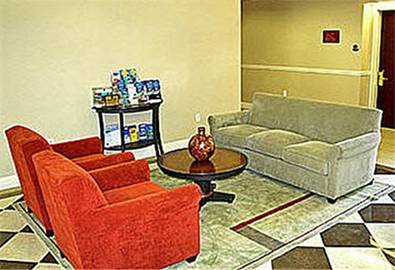
In the small lobby of a motel next to an airport, a man and a woman sit
across from each other. The woman is reading
a magazine. The man is considering the
situation. Nothing extraordinary.
Nothing stands out. Just a beautiful,
perfect package. A Grace Kelly package. Probably waiting on some guy who’s flying in. Room already booked. Nice simple dress. Nice complexion. A touch of lipstick. Maybe the guy won’t show, but she’s not worried. There are plenty of others. All she has to do is smile. Her phone is ringing . . . that’s probably him
calling to tell her he’s landed and will be here in a few minutes. Telling her he can't wait to see her . . .
hold her . . . touch her . . . “I can hear you fine,” the woman says. “I’m glad you could call through. The weather channel said all flights were confused,
and the airline’s automated attendant kept asking for my ticket number, so I didn’t
know where you were. I came to the motel
in case your flight wasn’t canceled . . . . Trust me, Darlene. Everything will be fine. Sue Benson said she would co-chair this time
and you can co-chair in Minneapolis . . . . That’s wonderful. Thanks for the call.” The woman puts the phone in her purse, stands up, and starts
walking towards the door. The man stands up.
“Pardon me ma’am.” The woman is startled—as if she was not aware the man had
been sitting across from her. The man pauses for a moment. “I don’t mean to intrude, but I’ve been waiting
here in the lobby for almost an hour, and you’re the only person who has come
in. I’m a Sergeant in the U.S. Army. Tonight is my last night of leave. I’m trying to get to Lavelle Avenue and wondered
if I could get a ride if you’re going near there.” “I’m not going that way,” she says. The man quickly pulls an ID card out of his front pocket. He points to the picture. “As you can see, that’s me. And here, it says I’m a Sergeant. And here’s my name. James D.
Rollins. But it’s a misnomer,
everybody calls me Frank.” “Frank?” “That’s right. The
“D.” stands for Dean. Shortly before I
was born, my mother saw a poster of the actor James Dean and decided if she named
me after him, I might grow up to look like him. Then, about a month after I was born, she found
out he was juvenile delinquent in the movie “Rebel Without a Cause,” so to avoid
the risk of my growing up like that, she always called me “Frank.” “But why Frank?” “She liked it better than Fred. Look,” he says, pulling a folded piece of paper
out of his front pocket and unfolding it, “here are my leave orders,” and points
to a spot on the paper. “EOL” means “End of Leave” and here beside it is today’s date,
15 July. It would be very patriotic of
you if you could even take me to within marching distance of Lavelle Avenue.” “It’s the least I could do, I suppose, given this is your
last night of leave,” she says, “and it is getting late. Where did you say you were going?” “I’m going to a club on Lavelle Avenue.” “There’s no club on Lavelle Avenue—only warehouses,” she says. “I’ve spent summers here since I was born and
know every club in town. There certainly
isn’t one on Lavelle Avenue. You must have
the wrong street. What’s the name of the
club?” “It doesn’t have a name.” “It doesn’t have a name?” “That’s right. It’s
an ethereal club.” “An ethereal club.
Now that’s a new one. Are you Cinderella?” Frank chuckles. “Hardly. Whenever warehouse space is available on Lavelle,
an illegal from El Salvador named Omar Sursa rents the
space for the night. He gets a band, puts
boxes from the warehouse around the parameter for seats, then, at the end of the
evening, turns it back into a warehouse.
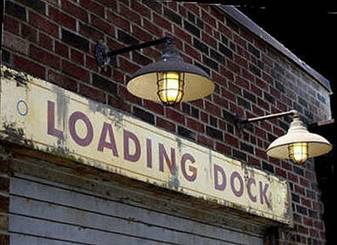
And there you have it. A pop-up
club which vanishes in the night air.
A club that never was. An ethereal
club.” “How do you know there will be one tonight?” “I went to one on Wednesday and got a telephone number to
call. Tonight’s the night.” “They must be pretty good to be able to operate like that,”
she says. “They are. And one
thing is for sure. Those Salvadoran women
are hot. When they dance, it’s a meltdown. Who knows?
I might get lucky.” “You . . . might . . . get . . . lucky,” she says slowly. “Did you get lucky Wednesday?” “No. But if you want
something, you have to do something, so I’m going dancing.” “Are you a good dancer?” she asks. “I can hold my own.” |
|
“Thanks for the ride.
It was very patriotic of you to go out of your way to bring me here.” “You’re welcome,” she says, “but are you positive this is
the place? There’s only one other car here.” He looks at his phone.
“I’m early. That is probably Omar’s
car. In a half hour, the only parking will
be two streets over. Well, thanks again,”
he says and reaches for the door. “I’ll go in with you for a look around,” she says. “It may be a club my friends would like to hear
about.” Looking her straight in the eye, he says, “This club is not
your kind of club. We’ll be the only ones
speaking English. You’ll be the only woman
wearing a dress. In this club, the jeans
wiggle and the tops jiggle. This is where
we part ways.” Looking him straight in the eye, she says, “I can handle it. Can you handle it?” “I can handle it.” “Then let’s go and get a good box.” “What’s your name?” “Monica.” She smiles. “The same as on my birth certificate.” Two hours later, Monica and Frank come out of the club. “What a night!" Monica says. “Packed.
Body-to-body the whole time. I was
sweating like a pig, and I loved every minute of it. I’m so glad you invited me to come with you.” She puts her arm around his and presses against
him for a moment. “Thank you so much.” “It was fun. By the
way, where in the hell did you learn to dance like that—you turned that dress
into a deadly weapon and blew the Salvadoran cuties out of the warehouse.” “Mrs. Johnson’s School of Ballroom Dance.” “Wait a minute now.
That was no box step when you put your hand around the back of my neck
and did the slow roll against me.” “Well . . . we did have homework.” He laughs. “I’ll say.” “And where did you learn Spanish?” she asks. “You were rattling it off tonight like you were
from El Salvador.” “I’m an interpreter.
That’s my job in the Army. I went
to school sixteen weeks to learn Spanish.
Total immersion.” “I’m impressed,” she says. “How many languages do you speak?” “A few.” |

|
After driving Frank back from the club, Monica parks in front
of the motel. “I want you to know I had a great time tonight,” Frank says. “It’s funny how things work out isn’t it. To meet somebody I like on my last night of
leave.” “I guess for a soldier it is pretty bad. Having to go back to your post and not go anywhere
until your next leave.” “Yeah. It’s pretty
bad.” “We can stay in touch,” she says, “and the next time you get
leave, we can get together. It won’t be
that long I’m sure.” “It’s going to be a long time.” “What do you mean?” He pulls his leave orders out of his pocket and points to
a spot on the paper. “You see the
“DS.” “Yes.” “DS means Duty Station and right beside it you can see the
word “Afghanistan.” I am flying to Afghanistan
tomorrow for a tour of duty which will last for at least a year with no R&R.” “What’s R&R?” “R&R means rest and relaxation—a
vacation. Normally, I would get a week
of R&R, but I’ve heard Dari interpreters like me
aren’t getting R&R because the strategic need is
so high. “What’s Dari?” “It’s a Persian dialect used by different Afghan ethnic groups
to talk to each other. It’s close to being
a universal Afghan language.” “You know, you don’t look like someone who can speak a foreign
language. You look like a regular old American
guy . . . like . . . James Dean. Your mother
was right the first time.” They sit in silence for several minutes. “I guess we could write each other,” he says. “Cell phones don’t work where I’m being deployed. I’m outside Sprint’s network. With the mountains and all. But it won’t work you know.” “I know. A year is
too long.” There is long pause before he looks at her and says, “I guess
it’s now . . . or never.” Monica is silent.
She is looking at Frank, but he knows she isn’t seeing him. He watches her face, trying to discern some
brief subtle emotion. Finally her eyes focus on his. “May I look at that paper again please?” she asks. He hands it to her. She reads it very, very slowly and hands it back. “It’s now.” |

|
In the morning, Frank wakes and looks around the motel room. I wonder where Monica is; her purse is on the nightstand. She had better come back soon. I have a plane to catch. The motel door opens part way and Monica peeks in. “Darn!
I was hoping you were still asleep, so I could wake you.” “If I didn’t have to board a plane shortly, nothing would
make me happier than to get back into bed and give you that opportunity. What’s in the bag?” “A surprise. Do you
want me to get you a cup of coffee from the lobby while you are getting dressed?” They don’t talk while waiting for Frank’s plane to board. Finally Frank stands up. “I guess it’s that time,” he says. Monica opens the paper bag, takes out a red rose, and hands
it to him. “I wanted to get you something
to remember me by, but there was no time.
I recalled the roses in the park across the street from the motel, so I
went there this morning and picked this one for you.” He takes the rose, turning it around and around, and touching
each petal. “It's beautiful.” He says, looking up at her, “You're beautiful.” Looking into her eyes, he says, “You have been totally honest
with me. You held nothing back.” He puts his arms around her and holds her tight
against him. “I will to miss you so much. I’ll carry this rose in my heart wherever I
go. It will never fade.” She whispers, “Please come back . . . to me.” “I will,” he says.
“I promise.” He steps back, pulls a pen from his uniform coat and his leave
orders from his pants pocket. “Quick. Write your full name, address, and telephone
number on the back of this. I’ll write
you as soon as I’m in-country.” “I’m writing two addresses. Connecticut is where I live from September to
June.” The flight attendant has come over from the gate. “Sergeant, the gate is closing.” Frank gives Monica a quick kiss on her cheek and says, “I’ll
be in touch.” |

|
Over a year has passed, and Monica
is browsing in a small, upscale, home furnishings shop. She is looking at a lamp near the front of the
shop. She hears the tinkle of a bell as
the shop door opens. She hears the door
close. No footsteps. Silence. Turning away from the lamp, Monica glances towards the door. A man is standing by the door with hands clasped
together in front of him. His face shows
no expression. He is perfectly still—staring
at her. She looks at him for several seconds
before she presses her hand hard against her chest and inhales sharply. The man walks slowly to her, not taking his eyes away from
hers. “Do you remember me?” he asks. “Yes. It took a moment
though. You are so dark . . . like one
of those desert nomads in National Geographic.” He chuckles. “A lot
of other people thought so too, including the desert nomads.” A man holding two figurines comes into the room and stands
close to Monica. “Hon, how do you like
these? They would look nice in the hallway.” “They would look nice in the hallway,” Monica says. “Jack, this is Frank Rollins. Frank’s a friend of mine from prep school days. He is in the Army and has just returned from
Afghanistan.” “Nice to meet you,” Jack says. “Monica, sugar, aren't these statues great. Should I get them? I’m not taking them home unless you like them.” Glancing at the figurines, Monica says, “They will look nice
in your hallway.” “Janette! Janette!”
Jack calls out. A woman comes into the room. “I’ll take these Janette.” “I’ll wrap them for you,” the woman says. “No. We’re on a tight
schedule, so I’ll just take them as they are.
We’re giving a party tonight, and the guests will be arriving shortly.” “Frank,” Monica says.
Why don’t you walk out with us. When they are outside, Monica says, “Jack, I want to talk
to Frank for a moment. I need to find out
what happened to some of our mutual friends.” “All right, but I’ll be keeping my eye on you. Being just back from Afghanistan, Frank here
probably hasn’t had any free stuff for quite a while. Right soldier?” Frank says nothing. “Make it snappy hon.
We have to get back. I don’t want
the caterers to do the greeting.” Monica and Frank sit on a bench outside the shop, and Monica
says, “I guess you know this is a big surprise. You never wrote me like you promised—not even
one letter—so I wrote you off —a long time ago. I forgot about you completely.” “Believe me, it wasn’t by choice. When I hit Kabul, I went through processing
and boarded a chopper all within an hour of landing. Not long after that, I was leaving my point
of departure, a firebase on the edge of the Korengal
Valley in Kunar Province, when my chopper took a hit
and went down. When I woke up, I was in
a Chinook with an intravenous in my arm and nothing on but my skivvies. The first thing I thought about were my leave
orders with your addresses on the back, so I asked the medic to hand me my pants. The medic said, ‘You’re wearing them. By the time we landed, the locals had stripped
the wreckage of everything including your uniform. But consider yourself lucky. The crew didn’t make it. Whoever stripped the chopper thought you were
like the others, or they would have finished the job. In fact, I thought rigor mortis had set in when
I tried to pry your hand open.’” “How did you find me?” Monica asks. “I’ve been here ten days hoping and praying you were in town. During the day I went from store to store looking
for you. At night, I hit the clubs. I remembered your saying you knew every club
in town, so I figured I might come across you in one of them.” Monica looks away from him. “I don’t believe you.” Frank pulls a thin wallet from his front pants pocket and
takes out the only thing in it—a clear plastic card, yellowed and ragged. “This was what was in my hand. The medic said he thought it must mean an awful
lot to me because I was holding on to it so hard, so he saved it for me.” He hands the card to her.
“The minute I was discharged from the hospital, I bought this plastic card
to protect it.” She stares at the plastic card for a few moments. When she looks up, tears are in her eyes. “It’s a rose petal. From the rose I gave you. I remember the color like it was yesterday.” She wipes her eyes and hands the plastic card back. “Are you married?” he asks. “No. Jack is just someone
I’m seeing.” “I promised you I would be back. I thought about you every day and night. Ever present in my mind was the thought to default
on my contract—go AWOL—and come back early, so you wouldn’t think I had lied to
you.” “Aren’t you still in the Army?” “I have another six months, but I’m living off base. In a townhouse. Would you like to join me?” “I would.” “How about tonight.
After the party.” “I can’t tonight.
I want to prepare my dad for this sudden, out-of-nowhere, life-change. I didn’t tell you this before, but I live at
home. If I didn’t go home tonight without
telling him about you, he would be so alarmed he would have the police out looking
for my car.” “Wasn’t he alarmed when you spent the night with me?” “I called him when you went into the 7‑Eleven and told
him I had a flat tire. He understood.” The door of the shop opens, and Jeanette comes out. She pauses beside the bench and says, “It was
nice seeing you again Monica. When you
have some free time, do stop by so we can chat for a while. We haven’t had a long talk all summer.” After Janette leaves, Monica looks at the empty parking lot
and says, “Don’t you have a car? I though
Janette’s car was your car.” “Mine is parked behind one of the other shops.” “Jack is starting his car,” she says. “Do you have a piece of paper? I want to give you my number.” “Just say it. I’ll
remember.” “Are you sure?” “Trust me. Just say
it.” “631‑924‑0517” “Got it.” “Say it back just to be safe.” “An interpreter never forgets a good-looking woman’s number.715-042-9136.” “What! That’s not even
close! Give me your hand. I’ll write my number on it.” “You’re right. I had
it backwards,” Frank says. “How about 631‑924‑0517?” Monica is taken aback; regains her composure; gives Frank
a hard look; and smiles. “That’s better,”
she says. Jack’s car stops in front of the bench. “Come on hon. We’ve got a party to go to. Ours.” When Monica is in the car, Jack says to Frank, “Sorry we can’t
invite you to tag along friend, but it’s a sit-down and all the chairs are taken.” Frank walks to the car, puts his hands on the edge of Jack’s
door, bends down, and looks Jack in the face.
He smiles, moves close to Jack’s ear, and whispers, “Count the fingers
on your right hand.” Still smiling, Frank straightens up, and walks away. Driving out of the parking lot, Jack looks in his rearview
mirror. “There’s something wrong with that
guy,” he says. |

|
When Janette arrives to open her shop, she finds Frank sitting
on the porch steps. “Hi Janette. Do you remember me from yesterday? We weren’t introduced, but my name is Frank
Rollins.” “Of course. You’re Monica’s friend.” “Janette, I’m in a very awkward
situation. I can’t remember Monica’s last
name. I’m sure you can imagine I don’t
want to ask her what it is.” Janette pats Frank on the arm. “Oh, what a predicament, but I’ll save you. I watched you and Monica from the window before
I came out. I could see there was something
special between you two, so I know she won’t mind. Monica’s last name is Overbrook. How do you know her?” “We met about a year ago; just
before I left for Afghanistan. Yesterday
was the first time I had seen her since my return. We’re just now getting reacquainted.” “Are you in the service?” “The Army.” “Have you met Winston, her father?” “No. Monica and I just met briefly. I really don’t know anything about her.” “I take it you don’t read the society
section of Town & Country.” “The magazine?” “If you did, you would know Monica
is a civic-minded young lady who spends quite a bit of time organizing and attending
galas and balls to raise money for charity.
She is very social, very high society.” “Oh.” “If you read Town & Country,
you might notice she is never pictured with the same man twice. It’s a shame. She’s a beautiful girl with such a pleasing
manner.” “What's the problem?” “I suppose I can tell you since
it’s common knowledge.” Frank nods. “The men she goes out with are
known as “90‑day wonders.” “90‑day wonders?” “She is notorious for going out
with a man for two or three months and then dropping him for no apparent reason. Jack Watson, the man you met yesterday, has
dated her for about two months, so his turn is coming up. She stops the show before it can get started. And the men keep coming. It’s amazing.” “Oh‑oh. I think I’m in trouble.” “Maybe not,” Janette says. “But I’ll give you a warning. Her father is a tough old bird who runs background
checks on her “90‑day wonders,” and, if he has even the slightest suspicion
they are out to take advantage of Monica, he runs them off in a flash.” “Background checks on a child’s
lover by wealthy parents seem to be standard procedure these days. Could it be her dad wants to be the only man
in her life?” Frank asks. Janette shakes her head. “No.
Winston is a widower and would love to have grandchildren to keep him company. Monica is the problem. There is a lot of speculation as to why she
is the way she is. Personally, I think
she was hurt badly somewhere along the line and doesn’t trust men.” “Could be,” Frank says, “or else
she enjoys changing partners.” “I don’t think so. She told me last summer she would gladly trade
all her pictures in Vanity Fair and Town & Country for a color in the Times.” “What does that mean?” Frank asks. “The New York Times is where the
society ladies announce their weddings.
She’s searching for someone.” |

|
One morning, about a month after Monica had moved in with
Frank, she tells him it's time he met her father. She says she is at fault for not introducing
him sooner, but it can't be put off any longer. Her father has insisted they come to the house
that afternoon. As Frank parks the car, he says, “Nice place your dad has.” He pauses.
“You haven't been delaying this introduction because I'm a sergeant in
the Army have you?" "No. I told him
upfront.” "What did he say?" "Nothing. Even
though he didn't pursue the subject, I could see he was surprised. But it doesn't matter. He'll come around when he gets to know you. “ "Why the delay then?" She takes Frank's hand and holds it tight. “These past few weeks have been the happiest
of my life. I didn't want a single thing
to change. But now I want you to know I
love you, and, no matter what is said or what happens, I will go where you go. I will never leave you as long as you want me. You are deep inside me.” He leans over, kisses her, and smiles. “Don't be afraid fairy princess. You're not alone.” They enter the house and find Mr. Overbrook reading in the
library. He puts his book aside and stands
up. “Dad, this is Frank.” Winston Overbrook extends his hand. “We finally get to meet. I’ve been looking forward to it. Although I don’t see much of Monica these days,
I had the feeling she was trying to keep you under wraps. What’s it been—a month since you encountered
Monica at Jeanette’s?” Frank takes Winston’s hand and says, “Yes. It’s been about a month.” “Why don’t we go into my study,” Mr. Overbrook says. “Something arrived yesterday which I would like
to share with both of you.” They walk into a spacious, wood paneled room. “Sit in those chairs,” Winston says pointing
to two leather chairs facing a desk. He
points to some pictures on a table. “The
pictures beside Monica’s are of my wife, Kate. She passed away when Monica was eleven, and
it’s just been Monica and me since then.” Frank picks up one the pictures of Kate and says, “Monica
bears a strong resemblance to her mother.” “She does,” Winston says.
“I’m often reminded of Kate when I look at Monica.” Winston leans against the edge of his desk and crosses his
arms in front of him. “Monica tells me
you are a gifted linguist who speaks several languages.” “That’s correct,” Frank says. “She says you are a sergeant in the Army who has just returned
from a year in Afghanistan.” Frank says nothing. “The reason I insisted on this meeting,” Winston says, “is
I want Monica to know who you really are.” “Dad! What are you
doing! What are you saying!” Frank puts his hand on Monica’s arm and says, “It’s all right.” He looks at Winston and says, “Go on.” “Jack Watson’s background check got to me first.” Winston picks up a folder from the top of his
desk. “Jack was very concerned about Monica’s
well-being, so he passed his agency’s report to me. His agency says James D. Rollins is a professional criminal who spent
the last year in an Arizona prison for extortion. The reason it was only a year was because the
witnesses against you disappeared just before the trial.” Winston takes a page from the file and hands
it to Monica. Without looking at the picture,
she hands it to Frank. Frank looks at the
picture and says, “The mug shot does bear a strong resemblance to me—minus the
tan of course.” Winston says, “It’s not a resemblance; it’s you.” He puts the folder down and picks up another. “This is my agency’s report on your background. It says James D. Rollins is an up-and- coming insurance executive
from Milwaukee with a wife and a baby who recently returned after a year in Europe
with his company’s Swiss subsidiary.”
Winston takes a picture from the folder and hands it to Monica. Once again, Monica hands the picture to Frank
without looking at it. Frank looks at the picture and says, “The little fella has
my ears wouldn’t you say?” Winston shouts, “Who are you!” “Why don’t you take sit down Mr. Overbrook. I’ll explain everything.” “You sure as hell better if you know what’s good for you.” When Winston is seated, Frank walks to the desk, picks up
the first folder, and hands it to him. “On page three, you will find a copy of an article from
an Arizona newspaper, the Nogales International. The fifth through the ninth lines are highlighted. They say James cut off three fingers from the
right hand of a rival in a dispute over a woman. “It’s here,” Winston says and hands the folder back to Frank. Frank hands him the second folder. “On page 11, four lines from the bottom. It says James’ wife, Bitsie, was a debutant
from a wealthy Boston family who prefers raising a family to being in high society.” Winston nods his head.
“That’s what it says.” Frank places the folder back on the desk and sits down. “Mr. Overbrook, my name is not James
D. Rollins. It’s Frank Keen. If your agency were to give you a report on
Frank Keen, it would be a blank piece of paper. Frank Keen doesn’t exist—no tax return, no credit
card, no DNA. Google has no links to him.” Frank leans forward and says, “I’m an independent contractor
who performs intelligence and counterintelligence services for a number of NATO
countries. My father started the company
after working for the federal government in a similar capacity. I learned the business from him and took over
his contracts when he retired. Frank looks at Monica.
“Sorry to put you through this dear, but I wanted you and your father to
have absolutely no doubt whatsoever as to who I am.” There is long silence before Winston says, “Are your parents
still alive?” “Oh yes. Right now
they are touring Turkey and Greece in a motor home.” After another long silence, Frank says, “Mr. Overbrook,
my annual income is in the high sevens when NATO is at peace and low eights when
it is at war. If I hadn't met Monica,
I would still be in the field, cashing in on troubled times. But now forever being on the road and in extreme
danger has lost its appeal. The thrill
is gone. I'm going to open an office and
hire others to do the fieldwork.” “That would be a smart move,” Winston says, “given the multitude
of terrorist organizations in today’s world.
When do you think you might make the switch?” “I should know in a couple of months. However, whether it’s sooner, or whether it’s
later, one thing is certain. It will be
announced in The New York Times . . . with a color.” Frank glances towards Monica. She seems puzzled. Suddenly, she gets up and walks to him. She puts her arms around him and whispers in his ear, “It’s now.” |

https://firewire-connects.com
https://firewire-fiction.com
Copyright © 2008 by FireWire
All rights reserved, including the right to reproduce
this story or portions thereof in any form whatsoever.
 is a
registered trademark of FireWire.
is a
registered trademark of FireWire.