|
|
Rescue
7 By FireWire |

Story No. 3
|
Damn! Damn Damn
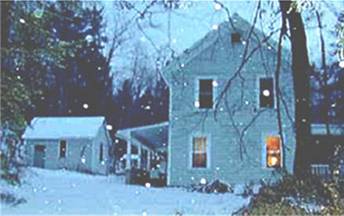
DAMN! A flat tire. In the middle of nowhere. Should have known better than to try a shortcut. It’s freezing. It’s dark.
Ten feet of snow all over everything.
Cell phone won’t work because of all these damn mountains. Now what do I do? Walk back to the house I just passed and pray
a pervert or serial killer isn’t waiting there. It’s the only house I’ve seen since I turned
off the interstate. Who in their right
mind would want to live in the middle of nowhere? I’ll say my husband will be by shortly. He’s following me, but was delayed leaving our
house. He had to stop for gas. The woman leaves
her car and walks back to the house she had passed. She pauses at the front door, takes a deep breath,
and knocks. A man opens the door. “Hi, I’m sorry to trouble you,” the woman says. “My car had a flat tire a short way from here,
and I wondered if I could borrow your phone to call AAA road service.” “You can certainly use my phone,” the man says, “but
there’s no AAA around here. “No garage
or gas station either.” He pauses for a
moment. “I’ll tell you what. I’ll change your tire for you; it will only
take a few minutes, and you’ll be on your way. Do you have a spare in your car?” “I don’t know.
I’ve never looked.” “Wait here a minute while I get my truck from around
back, and we’ll drive to your car. You
can sit in my truck and keep warm while I change the tire.” “I hope I’m not inconveniencing you,” she says, “but
I don’t know what else to do.” The man shakes his head and smiles. “No inconvenience whatsoever. You were fortunate to be within walking distance. The weather service just said the low tonight
could break the record. And to make things
worse, a major storm is due in tonight, so we need to get you out of here as soon
as possible.” After searching the woman’s car trunk with his flashlight,
the man says, “We’re out of luck. No spare
tire. We could drive to Grovesdale,
which is about 30 minutes away, and pick up a tire at Wal-Mart.” “Do you mind?’ “Not at all.
We should be able to beat the storm.
It hasn’t gotten to Binghamton yet.” “I want to tell you how much I appreciate this,” she
says. “I hope I didn’t interrupt anything.” “You didn’t.
In fact, I was between books and in the process of deciding on a new title.” “Oh. Are you a
writer?” “I wish I was.
I’m just a reader.” As the truck speeds through the night, the woman stares
at the road ahead, glancing frequently at the man. He’s not a talker either. We’ve been riding for at least twenty minutes,
and he hasn’t said word one. He should
have at least been looking at me. But it
makes sense I guess. He wouldn’t live out
here if he was a regular guy. I’ll have
to ask him. “Pardon me. I
hope I’m not intruding, but I was curious about the logo on your hat. What does FDNY mean?” “Fire Department of New York.” “How interesting.
I didn’t realize New York had a fire department.” “It’s the Fire Department of New York City.” They drive the rest of the way to Grovesdale in silence. They buy the tire
and are on their way back to the woman’s car. “That was so nice of you to help that little boy pick
out the right type of cleats to buy. His
mother was clueless, and I could tell she really appreciated it,” she says to
the man when they are back in the truck.
“They called you ‘coach.” Do you
coach the local Pee Wee football team?” “Those were soccer cleats, and I coach his oldest brother
on the Grovesdale high school soccer team.
The boy’s name is James and his mother’s name is Ann. Like most of the families of the players,
they attend every game, so you get to know them over time. Grovesdale has a lot of talent for a class‑four
school and has gone to the state soccer finals the last two years. They won it my first year and came in second
last year.” “That’s quite an accomplishment. Since you’re the coach, you must teach also. Are you a phys ed teacher?” He shakes his head.
“Not me. I gave up the daily commute
when I left New York two years ago. I coach
on a volunteer basis when I’m off duty.
I’m a fire fighter in New York . . . City.” “That shouldn’t surprise me. I’ve been off the mark all night, but now I’m
thoroughly confused.” “I know.” He pauses. “It’s time I told you my story.” His eyes stay focused on the road ahead. In the headlights, the snow is beginning to
thicken. “My name is Jan Stewart. I work a two-week, 24-hour shift as a fire fighter
with the Fire Department of New York’s Rescue Company 7. On my week off, I volunteer for community service
in Grovesdale. Two years ago, I was driving down Third Avenue in New
York; my cell phone started ringing; I took my eyes off the road to see who the
call was from; my wife screamed my name.
During that split second, a drug-driven delivery truck gunned out of an
alley and into the passenger side of my Hummer. I woke up in a hospital—my wife of two years
and my daughter of three months—dead. My Hummer was the biggest made, military grade, but it
didn’t matter. They didn’t have a chance—DOA. Even now, I can’t hear a cell phone ring without
remembering that last fraction of a second.” She doesn’t reply.
The snow is falling fast now. After a while, he says, “That’s my story. What’s your story?” Then he quickly says, “I
didn’t mean to say that. Your story is
none of my business. I apologize.” She notices her hands are clenched tight together in
her lap. She relaxes them and says, “No,
it’s all right . . . . I’m trying to compose myself . . . . I don’t know yet how
to say what I want to say.” When they arrive
at the woman’s car, they find the blowing snow has banked up against the car and
covered the wheels. “I was afraid of that,” he says. “Fortunately we fire fighters always carry a
shovel in the back of our pickups. I’ll
dig your car out and change the tire.
You’ll be out of here in no time.” He opens the door, but she puts her hand on his arm. “Wait,” she says. “I’m coming with you. I want to help.” He turns back towards her. “There’s nothing for you to do,” he says. “It’s a one‑man job. You stay here where it’s warm.” “I can hold the flashlight.” “I have a miner’s headlamp. It fits over my hat.” “I’ll hold that.” He looks at her face and then her feet. “If you insist.”
He reaches into the space behind his seat and pulls out a pair of high
boots and a blanket. “These are fire boots. They won't fit, but they’ll keep your feet dry. You can cover your head with the blanket.” “That was a tough animal, but it’s done.” He stands up and brushes the snow from behind
his neck. “I’ll get your purse and make
sure your car starts. Those snow plows
which passed us won’t be back for a couple of hours, so you need to get on the
road now. I don’t know where all this snow
is coming from. It wasn’t predicted to
arrive this soon.” “I’ll walk back with you,” she says. She opens her door, gets in, and closes it. She motions for him to get in. He opens his door.
“Anything wrong?” “No. Everything
is fine. You know, there is no way I can
thank you enough for changing my tire and digging my car out in a blinding blizzard. Taking care of me. And you don’t know me from Eve.” “It was my pleasure.” He smiles.
“After you rescue someone from a burning building, changing a tire in the
snow is like being on vacation. I’m glad
I could be of service to someone in need.” “I want to talk to you,” she says. “I want to tell you my story before I go.” He looks at the road and the snow which is starting to
cover it. He turns back and looks at her
for a moment. “OK,” he says, and gets in
the truck. “My name is Denise Simmons. My mother died of cancer when I was a senior
in college and my father of carbon monoxide poisoning not long afterwards. I took what little savings they had,
transferred to a local college and took on the job of raising my younger brother
who was fifteen—a big fifteen. It didn’t take me long to find out he was half way into
the hell of drug addiction, and with my parents gone, there was no stopping him. I can’t begin to tell you the nightmare my life
became. Up until then I didn’t believe
there was a Satan. But now I know there
is one – I saw him take my brother’s soul. Finally—when I thought there was no way out, no way to
stop him, the Lord stepped in. One night,
my brother physically assaulted me when I try to keep him from driving our car
while he was high. I called the police
and, because he had a police record, forced him into a situation, at sixteen years
old, to either go into a boarding school with a treatment program until he graduated
or go to jail. That was two years ago too, but my story doesn’t have
a tragic ending like yours. I’m on my way
to his graduation. I think God has given
him his soul back, but I’m scared. I visited
him many times while he was in school.
He seems OK, but I can’t get the fear out of my thoughts of how he used
to be.” “I understand how that is. Is your brother graduating from The Community
School?” “Yes,” she says.
“Do you know the school?” “I volunteered to coach there, but they said only their
staff members could coach their teams.
And believe me their staff needed help. None of them knew what a soccer ball was until
they became soccer coaches. But you know what?
They were the only team in our league to beat us last year and that was
in the state finals. We were undefeated
going into the finals, and The Community School had one loss—to us. I’ll bet your brother played on that team;
I’ll bet he played left forward.” Denise is surprised. “He did.
How did you know?” “The loudspeaker announced his name after he scored the
only goal in the game. No need to worry. I remember watching him play. He played smart and he played clean. He has his soul back.” |
|
Denise and Mike
are standing in the school auditorium after The Community School graduation ceremony. “Oh Mike, you made it. You graduated from the hardest school I know
of. I’m so happy for you.” “You aren’t the only one. I’m just happy I made it. Do you mind if I say good bye to a few friends
and my sponsor before we leave?” “Of course not.
Can you introduce me to your soccer coach before we go? “ “Bill? I said
good bye to him yesterday after I helped him shovel the snow from the path to
the barn. There was so much snow we had
to shovel it twice so I said good bye twice.” “Please. I really
do want to meet him. Soccer meant so much
to you while you were here, and you’ve talked about him so much. My memory of The Community School won’t be complete
without meeting him . . . Please. Just
to shake hands.” Mike takes Denise
to Bill's office. “Bill, this is my sister, Denise. She wanted to shake hands with you before we
left.” Bill stands up extends his hand. “Hi Denise.
I remember you from the Riverside game—the first one —at the beginning
of the season.” “Did we meet then?
I do apologize. I met so many people
during that game that I was in daze.” “We didn’t meet.
I remember seeing you in the parking lot before the game and then again
in the stands. I would have been a lot
easier on Mike if I had known you were his sister.” “He doesn’t seem any the worse for wear,” she says. “In fact, he tells me, you run a great soccer
program. He learned a lot from you,
and I wanted to thank you while I had the opportunity.” “He was a pleasure to coach and a team player all the
way. “ “Bill, on my way up here, I had a flat tire, and a man
named Jan Stewart was kind enough to change it for me. He said he was a soccer coach at Grovesdale
High School, and Mike scored a goal against them. Do you know him?” “A strong, good-looking guy right?” “Yes.” “I don’t personally know him other than the pre‑game
and after‑game handshakes. I heard
he was a professional soccer player in Europe before marrying a French woman and
going to Wall Street. When his wife was
killed in a traffic accident, he quit Wall Street and became a fireman in New
York. Other than he lives in Grovesdale
now and commutes to work in New York that’s about all I know.” “He was impressed with The Community School and remembered
Mike.” “He should. This
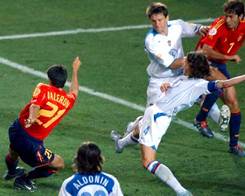
season Grovesdale won the state Class‑4 championship. We were the only team to beat them, and Mike
scored the only goal in that game. It was 0‑0 with less than a minute left in the
game. Pete Spalding, our right forward,
got the ball to within 10 yards of Grovesdale’s goal when their defenders caught
up with him and were scrimmaging for the ball. Mike here was standing around just outside the
scrimmage—looked like he was in la‑la land. “Mike,” I hollered, “get in there and help Pete. You are a forward. Get in there and get the ball.” Mike just stood there. The fans and the bench were hollering, “Get
in there Mike. Give him a hand. Don’t just stand there.” Still, he didn’t move. The Grovesdale defenders were manhandling Pete pretty
bad, had him penned in, but he managed to kick the ball out of the scrimmage. It was rolling about a foot an hour with one
of the Grovesdale players right behind it.
Mike, who everybody had forgotten by now, moved for the ball the instant
it rolled out of the scrimmage. When the
Grovesdale player’s foot was an inch away from the ball, Mike’s foot appears and
powers the ball straight into the corner of the Grovesdale goal. The whole play itself was so quick it took a couple of
seconds for it to register. Then all pandemonium
broke loose. Our players and students were
screaming, jumping up and down, hugging each other; the Grovesdale side were holding
their heads, groaning; their players were falling on the ground, beating the ground,
their goalie was crying. There was one
guy on their side, though, who was the picture of calm. He had his arms crossed and a tight smile on
his face, slowly nodding his head up and down—and that was your Mr. Stewart.” |
|
Eight months have passed since Mike’s January graduation
from The Community School. He is now home,
packing for college. “Denise,” Mike calls from his bedroom. “Do we have an extra extension cord?” “I don’t think so,” Denise calls back. “Why don’t you make a list of things you need. If we don’t have them, we’ll go to the store
and get them all in one trip.” “Good idea.” “Mike. Mike come
quick,” Denise shouts. When Mike enters the den, Denise is standing in front
of the television. “What’s wrong?” he asks. “Look at the screen.” “What’s happening?
Where is that?” “I think it’s the World Trade Center in New York City,”
she says. “They keep showing that awful
film over and over—a plane crashing into one of the towers.” “Turn up the volume!” A television news
reporter is standing on a sidewalk with a man beside him. A burning skyscraper is behind them, and a crowd
of people is in motion around them. “We are on Vesey Street in front of the North Tower,
tower number one, of the World Trade Center,” the reporter says. “For you who have just tuned in, a short while
ago, at 8: 13 a.m., a 767 commercial jet crashed into the North tower’s upper
level. Standing beside me is Bert Bergen
who witnessed the crash. Bert, what happened?” “Well, I heard an explosion which was so loud it about
tore my ears off, and then people on the street started screaming. Pretty soon people came running out of the tower
screaming and the firemen over there came.
It was like a scene from one those earthquake movies—one I’ll never forget. Stuff from the top of the building falling on
the ground; people pouring out of the building; people screaming; the firemen
loaded down with rescue gear moving towards the building; and all the while it
kept getting hotter and hotter and more and more stuff was falling. It took real bleep to go in there.” “You mean the fire fighters?” “Yea. It took
real bleep to go in there. This ain’t no
bleep bleeping movie.” “Can we get a shot of the fire rescue vehicle?” the reporter
says. “Oh no. No. It can’t be.” “What’s wrong Denise?” “That’s Rescue Company 7.” “So?” “That’s Jan’s company.” “Whose company?” “Jan Stewart’s rescue company.” “Who’s Jan Stewart?
Is he the Grovesdale soccer coach?” “What happened to the picture?” she screams. “Where’s the damn picture?” “Are you OK Denise?” “Something terrible has just happened to Jan. I have to go to New York to help him. He needs my help.” “He doesn’t even know you.” “Oh yes he does.” “You only met him once.” “Once was enough.
It’s clear to me now.” “What’s clear?” “That I have to go to him right now. Mike, I would like to see you off, but I’m sure
you and Freddie will manage just fine without me waving good bye.” |

|
Denise arrives
at the hospital and goes to the information desk. “Pardon me. What
room is Jan Stewart in? He’s one of the
fire fighters injured at the World Trade Center this morning. FDNY headquarters said the Rescue 7 fire fighters
were sent here.” “Let me check the list for you,” the man at the information
desk says . . . . I don’t see a Jan Stewart listed, but that doesn’t mean he’s
not here. We’re being overwhelmed with
so many seriously injured people requiring immediately treatment that don’t have
any ID on them that we’re treating first and identifying later. We can’t put them on the patient list until
we know who they are. If you’ll leave your
name and phone number, someone will call you when he comes up on the patient list.” “If you don’t mind, I’ll wait.” The man nods. Denise looks around the lobby. All the seats are filled. She walks to a vacant spot along the wall and
sits down. When Denise wakes, she sees the backs of legs. “Would you please give me a hand up,” she says
to the legs in front of her. She pushes through the crowd until she gets to the information
desk where a bulletin board, with sheets of notebook paper pinned to it, is propped
on two chairs. “UPDATED ON THE HOUR” is
written in large green magic marker letters on the left top sheet. She scans the list.
“J. Stewart 3B – Restricted” “What does ‘restricted’ mean?” she asks the woman next
to her. “It varies,” the woman says. “Most of the time it applies to people who have
just come out of surgery.” “How about ‘3B’?” “Third floor, Ward B.” “Do you think I will have a problem getting in?” “It depends on the doctor on duty. Tell him you’re the patient’s sister.” Denise is standing
in Ward B’s small, crowded reception area.
She sees the floor nurse glance in her direction as she talks to a doctor. The doctor looks at Denise for several seconds
before saying something to the nurse. When
the nurse leaves, the doctor removes his stethoscope from around his neck, puts
it in his coat pocket, and comes over to Denise. “Why don’t we walk over to the nurse’s station,” the
doctor says to Denise. “It’s a little quieter
there.” When they get to the nurse’s station, the doctor says,
“The floor nurse told me you are the fiancée of one of the fire fighters in this
wing.” “Yes, that’s correct. We were going to be married today. His name his Jan Stewart; how is he?” The doctor turns and takes a clipboard from the wall. He leafs through the pages until he comes to
one near the end. He reads it aloud: “Patient responded well to surgery and should make a
complete physical recovery.” The doctor lifts the page and reads several more paragraphs
on the next page before looking up and saying, “Your fiancée has been unconscious
since being pulled from the Trade Center, so we don’t know if he escaped internal
brain damage. There is no physical trauma
to the head or drainage of cerebrospinal fluid, and the MRI and EEG were normal,
but we won’t know for sure until he wakes.” “Doctor, Jan has no living relatives. Could I wait by his bed until he recovers .
. . please?” “Certainly. We
encourage family members to be present when the patient regains consciousness. I’ll take you to the recovery room.” They walk into
a large room lined with beds. “This is the post-operative recovery room,” the doctor
says. “Jan’s chart shows him being in the
last bed.” When they reach the bed, the doctor pulls the curtain
around the bed. “He’s been here for a while,
so he should awake before too long. If
he seems confused or has a bad headache, get the nurse immediately. She is at the nurse’s station in the hall.” “Thank you,” Denise says. “I was so worried.” The doctor says, “Your fiancé is a lucky man.” He pauses and looks at Denise. “A very lucky man indeed.” A cast on his arm and shoulder. A cast on his leg. A cast on his upper body. Bandages on his hands. But he still looks good. Real good.
I wonder what’s in this big envelope.
The envelope is labeled “Jan Stewart.
Papers found on patient.9/11/01.”
It’s sealed. I should have brought
a book. When Jan opens his eyes, he looks at Denise, and closes
his eyes. A moment later, he opens them
again. “How do you feel?” Denise asks. “Are you confused? Do you have a headache?” “No. I feel great. In fact, I feel wonderful.” “Are you sure you don’t have a headache?” “Positive.” After a few moments, Denise says, “You’re probably wondering
why I’m here.” “Nope.” A pause. “You’re not confused, are you?” “Not at all.” Jan glances at the envelope on the table. “You know, I got your address from The Community
School and wrote you several letters.” “You did? I never
received any of them.” “I’ll bet they’re all in that envelope. You told me the night we met you didn’t know
how to say what you wanted to say. Well,
I didn’t know how to write what I wanted to write. All of those letters say the same thing, ‘I
want to be with you.’ And this time around, God gave me a second chance.” Her hand touches his cheek. |

https://firewire-connects.com
https://firewire-fiction.com
Copyright © 2008 by FireWire
All rights reserved, including
the right to reproduce this story or portions thereof in any form whatsoever.
 is a
registered trademark of FireWire.
is a
registered trademark of FireWire.